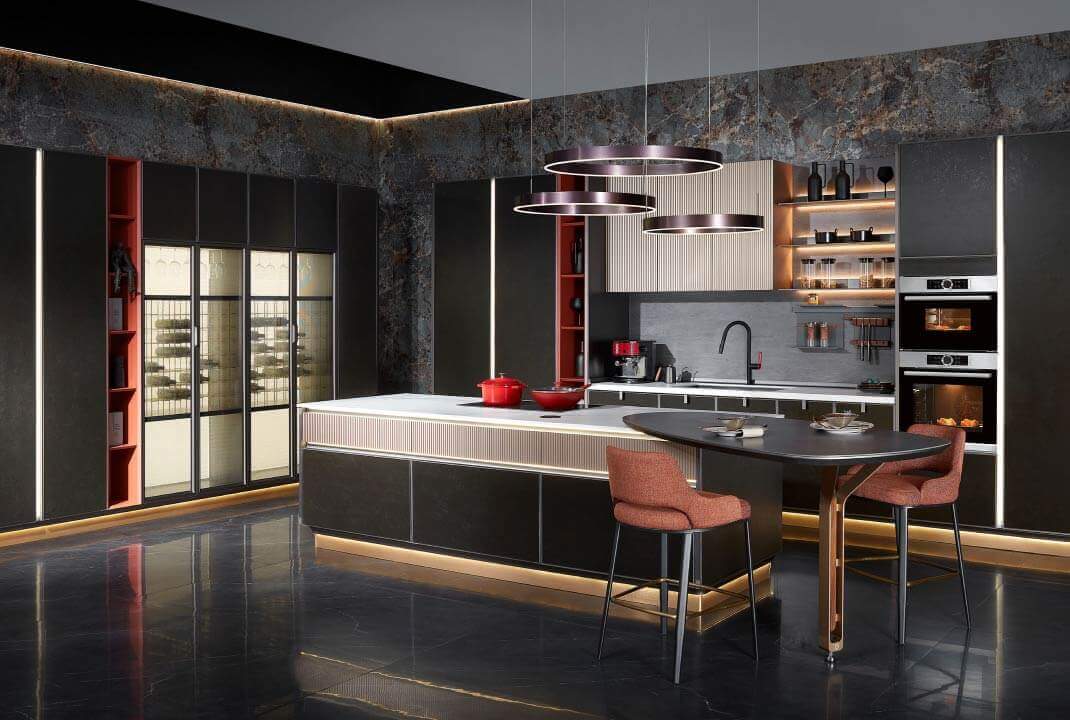
Best Luxury Kitchens in the US: Engineering & Spatial Mechanics
The planning of ultra-high-end culinary environments within premium United States residential properties requires a strict reconciliation between architectural boundaries, mechanical infrastructure, and advanced material science. Best Luxury Kitchens in the US. Within the landscape of luxury asset management, optimizing these multi-use spaces is a highly calculated objective. Long-term spatial utility, exceptional material durability, and property asset preservation must align perfectly with structural engineering principles. Achieving a truly world-class environment involves much more than selecting premium decorative details or high-cost appliance brands. It demands an analytical approach to spatial clearances, structural load tolerances, and integrated utility pathways.
Historically, luxury home renovations treated grand estate kitchens as superficial visual showpieces, isolating them from the core engineering infrastructure of the home. This narrow perspective frequently overlooked the compounding structural requirements of moving high-capacity water lines, gas mains, and high-voltage electrical sub-panels. Modern building science has corrected this fragmented view. Custom-carved marble island or a commercial-grade ventilation assembly requires reinforcing floor joist networks, verifying makeup air compliance, and managing localized thermal dynamics.
A successful layout strategy depends on identifying these hidden technical dependencies before construction begins. Cracked stone joints, and chronic mechanical failures. These technical setbacks strain capital reserves, delay project timelines, and lower the long-term return on investment for the property. Managing high-end spatial design requires looking past basic retail showroom templates. Planners must focus on structural preservation, ergonomics, and strategic component sequencing.
This study analyzes the technical frameworks, geometric arrangements, and risk-mitigation methodologies used to optimize ultra-high-end culinary environments. By focusing on asset lifecycles, mechanical fixity, and dimensional discipline, this guide serves as an authoritative reference. It helps architects, construction managers, and estate owners minimize unnecessary expenses while building high-utility culinary environments that stand as long-term assets.
Understanding “best luxury kitchens in the us”
The concept of high-end layout optimization within the United States residential sector is frequently misunderstood in mainstream lifestyle media. It is often reduced to superficial recommendations, like selecting trendy cabinet colors or purchasing expensive appliances. Within professional interior architecture, estate construction management, and residential engineering, however, the concept demands a far more precise definition. It represents the systematic coordination of physical volumes, mechanical lines, and clearance paths within a fixed architectural boundary. This optimization must be achieved without compromising structural safety, reducing mechanical access, or violating local building codes.
Balancing Structural Preservation and Capital Allocation
A complete spatial analysis looks past short-term design trends to evaluate the ratio of usable storage volume to open walkway space. A specific arrangement may provide maximum linear footage of counter space, yet fail completely if it restricts the door swing of major appliances. Therefore, identifying options for the best luxury kitchens in the us requires analyzing the specific mechanical limits of a home rather than relying on generalized templates.
Navigating these choices requires a clear framework that balances upfront material costs against project assembly times. The foundational hierarchy of value-based layout planning begins with the primary mechanical footprint layer. This layer accounts for fixed structural walls, plumbing stacks, and utility access points that cannot easily be relocated. Below this sits the clearance zone calculation layer, which defines the physical space required for appliance doors to open safely. The final layer is the component grade selection life cycle, which focuses on the material specifications of the casework and counters.
Resolving Spatial and Mechanical Trade-Offs
When analyzing these configurations, planners often mistake raw storage density for genuine functional utility. Deep corner cabinets may look efficient on a two-dimensional blueprint, but they can quickly become inaccessible dead zones without specialized interior hardware. Conversely, a minimalist configuration with less total linear footage can achieve higher functional efficiency if it aligns perfectly with natural human movement paths.
Implementing these structural adjustments requires balancing complex trade-offs between different zones. For example, maintaining a fixed plumbing footprint preserves significant capital but may restrict the kitchen to a single-wall layout. This limitation demands careful vertical storage planning to compensate for the lost horizontal footprint.
The Industrial and Architectural Evolution of High-End Domestic Workspaces
From Hidden Sculleries to Great Rooms
The organization of high-end residential food preparation areas has changed significantly over the past century. Early American estates isolated the kitchen entirely, treating it as a utilitarian scullery staffed by domestic workers and hidden from the home’s main living areas. These spaces prioritized basic fire containment, simple plumbing hookups, and separate paths for service staff. This layout isolated the noise, heat, and odors of cooking from formal entertaining spaces.
The Impact of Industrial Standardization
As the economics of domestic labor shifted in the mid-twentieth century, the layout of premium homes began to evolve. The development of built-in appliances and standardized cabinet depths allowed kitchens to integrate more smoothly into the home’s primary structure. The invention of high-output residential ranges and early refrigeration units brought the kitchen closer to the formal dining room. This shift turned the space from a hidden service room into a semi-public zone, requiring cleaner designs, higher-quality wood finishes, and better spatial planning.
Multi-Zone Entertainment Centers
In contemporary high-end American architecture, the kitchen has become the central focus of the home’s main living space. Modern open-concept plans blend preparation areas, dining zones, and living rooms into a single continuous space. This integration requires cabinetry and counters to serve two purposes: they must provide durable workspaces while acting as key architectural elements that tie adjacent rooms together. This requirement has led to the popularity of dual-kitchen layouts. These floor plans feature a highly finished “show kitchen” for open-concept entertaining, paired with a hidden, secondary “back kitchen” or scullery that handles heavy meal prep and cleanup.
Spatial Engineering Frameworks and Ergonomic Models
To successfully evaluate layout options and prevent long-term functional friction across diverse architectural conditions, designers must look past subjective preferences and rely on established mental models rooted in ergonomics and construction economics.
The Footprint Fixity Framework
The Footprint Fixity Framework operates on a strict rule of mechanical preservation: the total cost of a renovation scales non-linearly with every inch a utility connection moves away from its original structural location. This model requires mapping out existing sewer stacks, gas supply lines, and high-voltage electrical circuits before drawing new layouts. By keeping major appliances and sinks within their original footprint boundaries, planners eliminate expensive wall trenching and subfloor modifications, preserving capital for high-visibility surface upgrades.
The Total Installed Cost Continuum
The Total Installed Cost Continuum requires analyzing every layout specification through two separate cost variables: raw material purchase price and required installation labor hours. Materials that seem inexpensive on the showroom floor can become financial burdens if they require specialized on-site fabrication, custom adhesives, or complex subsurface leveling. This framework helps teams identify options that lower field installation hours, ensuring that upfront material savings are not wiped out by rising labor invoices.
The Architectural Traffic Control Model
The Architectural Traffic Control Model treats cabinetry installations as dynamic physical barriers that direct human traffic through a home. In open floor plans, the placement of island units and tall utility towers serves a dual purpose. They provide essential storage while physically blocking guests or children from entering dangerous hot zones near cooking surfaces. This perspective shifts the focus from simple storage density to the broader management of household traffic patterns.
The Law of Vertical Stratification
The Law of Vertical Stratification provides a framework for organizing items based on accessibility and weight constraints. Storage volumes are divided into three clear vertical zones: the primary ergonomic zone (between the knuckles and shoulders of the user), the secondary low zone (below the knuckles to the floor), and the tertiary high zone (above the shoulders to the ceiling). Applying this framework means standard configurations must allocate deep drawers in base units for heavy pots, open counters for daily tasks, and high wall units or valance shelving for seasonal items. This minimizes repetitive bending and reaching, protecting the user from physical strain.
Taxonomy of High-End Spatial Systems and Variations
Casework, structural platforms, and appliance integration models are highly varied across premium properties. To deploy capital and engineering resources effectively, layouts must be categorized by their mechanical behaviors, structural dependencies, and operational profiles. Each approach presents distinct engineering trade-offs that dictate its suitability for specific estate floor plans.
Custom Architectural Millwork Installations
This strategy uses bespoke, bench-crafted cabinetry tailored directly to the room’s precise dimensions. This casework features furniture-grade plywood boxes, hand-selected wood veneers, and custom-milled profiles that run seamlessly from floor to ceiling. The primary structural benefit is total spatial optimization, which completely eliminates the need for filler strips and maximizes storage density. The main trade-off is extended field installation timelines and high sensitivity to building movement, requiring precise site stabilization before assembly.
European Frameless Engineered Systems
This methodology relies on precision‑manufactured, modular cabinet boxes designed without traditional face frames. Built using high-density marine-grade core materials and finished with durable laminates, wood veneers, or matte lacquers, these systems optimize interior space. They deliver up to 15% more usable volume than framed units and feature integrated three-way adjustable hardware. The core challenge requires working with strict metric dimensions, which demands perfectly square, plumb walls and level floors to prevent door misalignment.
Industrial-Grade Stainless Steel Portal Formats
Adapted from commercial catering environments, this system utilizes marine-grade stainless steel for cabinet structures, doors, and integrated countertops. These setups offer exceptional resistance to heat, impacts, and moisture, making them ideal for high-use preparation spaces or indoor-outdoor pool houses. The primary engineering challenge involves managing acoustic dampening to prevent hollow metallic echoing, along with specialized welding requirements during site assembly.
Monolithic Stone Structural Formats
This premium approach wraps large island structures, cabinet faces, and matching backsplashes in continuous, book-matched slabs of natural marble, quartzite, or porcelain. The stone runs seamlessly across surfaces, creating a clean, sculpted look that treats the workspace as functional art. The primary challenge centers on dead-weight management. These heavy installations require reinforcing subfloors with structural steel joists and pouring targeted concrete footings to handle the concentrated load.
Integrated Architectural Component Frameworks
This approach treats the kitchen as an open furniture system rather than a series of built-in boxes. It uses freestanding storage towers, independent workspace tables, and floating wall shelves to create an open, airy environment that blends naturally into modern open-concept living rooms. While this layout provides excellent spatial flexibility, it reduces total storage density and requires hiding mechanical plumbing and electrical lines inside thin wall panels or floor tracks.
Hidden Scullery Auxiliary Formats
This layout divides the workspace into two distinct zones: a highly finished primary “show kitchen” for entertaining, paired with a hidden, high-performance “back kitchen” or scullery located behind a secret door or pantry partition. The show kitchen remains clean and uncluttered, while the scullery houses heavy-duty appliances, secondary dishwashers, and deep utility sinks. This dual-zone setup offers unmatched functional separation, but it doubles the property’s mechanical footprint, requiring dual plumbing stacks and separate ventilation systems.
| System Class | Primary Structural Action | Mechanical Footprint Impact | Weight Distribution Vector | Settlement Risk Profile | Construction Labor Index |
| Architectural Millwork | Ties directly to wall framing bays | Low utility modification | Distributed evenly across walls | Low after full wall shimming | Baseline (1.0x) |
| European Frameless | Mounts via precision rail tracks | Requires plumb wall planes | Concentrated on level legs | Moderate if floors sag | High (1.6x) |
| Stainless Steel Portal | Self-supporting independent frame | High grounding bond requirement | Linear footprint load | Very Low | High (1.8x) |
| Monolithic Stone | Anchors to heavy substructures | Extreme structural load addition | Concentrated point load | High if subfloor is unreinforced | Extreme (3.2x) |
| Component Framework | Stands free from primary partitions | High under-floor utility routing | Concentrated leg loads | Low-Moderate | Medium (1.4x) |
| Hidden Scullery | Duplicates primary utility paths | Demands separate service stacks | Distributed across two zones | Low | Extreme (2.8x) |
Realistic Decision Logic
Selecting the optimal layout requires analyzing the building’s age and foundation style. A historic property with settled timber framing is best suited for custom architectural millwork or European frameless systems. These options can be shimmed and adjusted to accommodate out-of-plumb walls without requiring major structural changes.
Conversely, a modern estate built with a thick concrete slab can easily support a monolithic stone format or a hidden scullery layout. This baseline allows for heavy materials and complex utility routing without risking long-term settling.
Real-World Spatial Scenarios and Structural Pressures
Scenario 1: The Coastal Estate Open-Plan Transformation
In a luxury oceanfront estate in Malibu, California, the owner wanted to transform a compartmentalized 300-square-foot kitchen into an open-concept entertaining space. The initial architectural proposal recommended removing a 22-foot load-bearing wall to open the kitchen to the main living area. This change required placing a 12-foot custom marble island in the center of the new space. Moving the main cleaning sink to this new island required cutting plumbing channels through a post-tensioned concrete floor slab, an engineering challenge budgeted at $38,000. This modification carried significant structural risks if any internal high-tension steel cables were accidentally severed.
To eliminate these structural risks, the revised engineering plan left the main plumbing lines in their original wall positions. The central island was redesigned as a dry preparation zone dedicated to food staging, wine storage, and casual seating. This adjustment kept plumbing lines safe within existing walls and completely avoided the need to cut into the post-tensioned slab.
During demolition, the crew discovered that a hidden roof drainage line passed down through the end column of the wall scheduled for removal. Because the team used a fixed-utility layout strategy, the budget easily absorbed the $4,500 cost to reroute this drainage line through an adjacent utility chase, avoiding project delays or structural compromises.
Scenario 2: The Urban Penthouse Custom System Integration
A high-rise penthouse overlooking Central Park in New York City featured a long, narrow galley kitchen with rigid concrete walls and strict construction noise rules. The owner wanted to install a premium European frameless cabinet system with matching book-matched Calacatta marble counters. However, the building’s concrete walls were out of plumb by up to two inches over a ten-foot run. Attempting to mount precision-manufactured metric cabinets directly to these uneven walls would cause the doors to bind and ruin the marble alignment.
To resolve these field variances without noisy concrete grinding, the installation team built an independent wood furring wall in front of the concrete structure. This secondary framing was aligned using precision laser levels, creating a perfectly flat, plumb surface for the cabinet tracks while creating a convenient chase for new electrical lines.
The building management restricted loud tool use to a brief two-hour window each morning, which threatened to inflate manual installation costs. Because the secondary furring wall allowed the carpentry crew to prep the space quickly, the modular cabinets were mounted using fast, quiet pneumatic tools. This kept the project on track and avoided noise complaints from neighboring units.
Scenario 3: The Historic Aspen Timber-Framed Refinement
A luxury mountain lodge in Aspen, Colorado, featured a spacious kitchen with historic hand-hewn timber framing and a large natural stone fireplace. The owner wanted to install a heavy, multi-ton French blue molten enamel cast-iron range, along with a massive matching flagstone ventilation hood. Placing these exceptionally heavy appliances onto the unreinforced floor structure would overload the historic log joists, risking structural sagging or collapse into the crawlspace below.
To support this heavy equipment without replacing the historic timber framing, the engineering team designed a targeted foundation reinforcement plan inside the crawlspace. Workers poured four independent concrete piers directly beneath the location of the new range, capped with heavy-duty adjustable steel columns that bolted into the underside of the floor joists.
This targeted support network transferred the weight of the cast-iron range and stone hood directly down to stable bedrock, keeping the historic timber frame safe from excessive loads. Additionally, because the structural work was contained entirely within the crawlspace, it preserved all visible historic log work. This compliance streamlined the local historic board review, allowing the project to proceed without delay.
Financial Architecture, Capital Allocation, and Resource Logistics
Evaluating the financial landscape of an elite kitchen project requires looking past basic material estimates. Standard home building budgets often overlook hidden complexities, such as professional site surveys, independent laboratory testing, specialty crane rentals, and structural liability insurance. To manage capital effectively, financial tracking must separate costs into distinct asset classes, ensuring that primary building stability is funded before selecting decorative finishes.
The true cost of a structural renovation includes professional engineering fees, skilled trade labor, municipal permitting costs, and an emergency contingency reserve. Spending the entire budget on premium visual finishes while ignoring old, settled framing lines introduces significant long-term risk. If a building settles after construction is complete, repairing the structural movement requires tearing out the new surfaces, ruining the financial investment.
[Systemic Framework: Engineering Capital Reserve -> Foundation Stabilization -> Cabinetry Customization -> Premium Surface Allocation]
By prioritizing infrastructure over decoration, owners can construct functional environments that align with the best luxury kitchens in the us. This disciplined capital distribution preserves equity and protects the structural integrity of the real estate asset over time.
| Structural Cost Component | Direct Material Cost Class | Associated Labor Fee Profile | Code Risk Vector | Lifecycle Value Output |
| Custom Millwork | High | High Specialized | Low Plan Check | High Spatial Customization |
| Steel Support Portals | High | Extreme Welding | Full Weld Inspection | Superior Shear Strength |
| Foundation Footings | Low | High Excavation | Soil Inspection Required | Long-Term Settlement Immunity |
| Hydraulic Shoring | Low-Medium | High Rigging | OSHA Site Safety Review | Temporary Stability Protection |
| Hardware Components | Low | Moderate Carpentry | Fastener Pattern Review | Code-Compliant Shear Transfer |
Diagnostic Tools, Software Solutions, and Spatial Planning Aids
Modern high-end project management has moved far beyond simple visual inspections and manual alignment checks. Identifying hidden framing stresses and verifying load path continuity requires a combination of digital testing tools, physical sensors, and detailed calculation logs.
-
Ground Penetrating Radar (GPR) Units: Handheld scanning devices that locate hidden steel rebar, post-tensioned cables, and electrical conduits inside concrete walls and floor slabs before drilling begins.
-
Electronic Tilt and Incline Telemetry: Digital sensors mounted to walls and ceilings that track microscopic structural movement during demolition, providing an early warning if temporary shoring shifts.
-
Ultrasonic Wood Testing Meters: Diagnostic instruments that measure sound wave speeds through old timber framing, identifying internal dry rot and insect damage that isn’t visible from the outside.
-
Calibrated Hydraulic Jack Gauges: Pressure meters mounted on temporary shoring jacks that display the exact weight being supported by the shores, ensuring the temporary walls are holding the building load safely.
-
Laser Cross-Line Alignment Levels: High-precision optical levels that project reference grids across sagged ceilings and floors, helping carpenters calculate the exact dimensions needed for new support beams.
-
Soil Cone Penetrometers: Mechanical testing instruments used to measure the load-bearing capacity of soil inside crawlspaces and basements before pouring new concrete footings.
Risk Landscape and Compounding Failure Modes
Large-scale interior modifications can introduce serious structural and financial risks if planned without considering broader load paths. When renovation teams focus entirely on creating open space without tracking how forces move through the house, they often trigger compounding structural failures. For example, installing a heavy steel beam to span a wide opening without verifying the strength of the basement framing directly below can create an immediate safety hazard.
The new beam concentrates tons of overhead building weight onto two narrow end columns. This immense downward pressure can crush the unreinforced subfloor framing, cause basement joists to crack, and lead to rapid settling that damages the entire center of the home.
The practice of modifying roof trusses to create vaulted ceilings without engineering a proper tie system introduces serious lateral structural risks as well. If a contractor cuts the bottom horizontal cords of a roof truss without installing engineered scissor collars or steel tie plates, the outward pressure from the roof rafters can push the home’s exterior walls outward.
Project Governance, Contract Management, and Field Protocols
An effective high-end kitchen installation should not be managed through casual field decisions or loose supervision. It operates as an active construction zone that requires strict contracts, written engineering change orders, and clear field protocols to ensure all work matches municipal safety codes. High-load framing connections experience continuous mechanical stresses over time, making detailed quality checks essential during the construction phase. Project managers should implement a systematic verification cycle to check every framing system before closing up the walls.
A layered construction checklist ensures that structural and financial integrity is preserved across all project phases:
Pre-Demolition Verification
-
Verify temporary shoring walls are fully tightened.
-
Check that hydraulic jacks are locked under load.
-
Inspect surrounding walls for pre-existing cracks.
Framing & Fastener Review
-
Check that all engineered beam plies are bolted according to manufacturer specs.
-
Verify jack studs are plumb.
-
Confirm all metal joist hangers are filled with the correct structural nails.
Point-Load Footing Inspection
-
Verify new concrete footings reach the required depth.
-
Check that steel rebar placement matches engineering plans.
-
Confirm the soil subgrade is compacted.
Post-Shoring Deflection Check
-
Monitor beam movement using precision laser levels as temporary shoring is slowly removed.
-
Ensure immediate settling stays well within safe building code limits.
Spatial Performance Metrics, Quality Signals, and Analytical Logs
Evaluating the success of a structural modification requires moving past simple visual checks. Accurate tracking relies on objective performance metrics that isolate real framing movement data from casual observations. Leading indicators include real-time shoring pressure levels, beam deflection ratios, and floor level consistency. These metrics provide real-time data showing whether the new framing system is holding up under load, allowing crews to fix structural variances before they cause cosmetic damage.
Lagging indicators, such as long-term drywall cracking or door misalignment years later, measure how well the engineering design worked over time. To ensure data integrity, project managers can maintain structured logs during the construction process.
For example, a framing alignment log records daily laser measurements to prove the new beams remain level under full load. A point-load tracking sheet confirms that every vertical post connects directly to a solid foundation footing. Finally, a fastener verification plan records that all structural hangers and bolts were inspected and approved by code officials before drywall installation began.
Industry Misconceptions and Spatial Oversimplifications
The Fallacy of the Infinite Footprint
The public discussion around luxury kitchen planning is filled with persistent framing myths that run counter to building science and basic physics. The idea that a premium space is immune to layout constraints simply because of a large budget is an oversimplification. Even in expansive estates, extending walkways too far between appliance hubs destroys functional efficiency, creating an exhausting workspace that undermines the benefits of high-end design.
The Oversized Beam Security Illusion
Similarly, the belief that installing a larger, thicker beam than required is always a safe way to avoid engineering expenses ignores secondary structural risks. While a deeper beam reduces deflection across the opening, it adds significant dead weight to the home’s framing. If the end support columns and foundation footings aren’t designed to handle this extra weight, the oversized beam can accelerate foundation settling, creating the exact structural problems it was meant to prevent.
The Standard Fastener Misconception
Another common misconception is that standard construction screws bought at hardware stores can be used for high-load framing connections. Homeowners often assume these screws are stronger than traditional nails because they hold tightly. In reality, standard wood screws are brittle and lack the shear strength needed to handle shifting building loads. True structural connections require specialized heat-treated structural screws or thick framing nails that bend without snapping under heavy loads.
The Open Shelving Capital Illusion
Finally, choosing open floating shelving is often praised as an easy way to customize luxury walls. While the raw material purchase price of wood planks is lower than a closed wall cabinet box, the long-term labor costs are frequently underestimated. Open shelves expose dishware to airborne cooking grease and dust, requiring continuous cleaning cycles to maintain basic sanitary standards. Additionally, open shelving demands perfect drywall finishing and meticulous styling, which can drive up initial installation and painting labor fees.
Supply Chain Dynamics, Building Codes, and Material Lifecycles
The materials specified for the best luxury kitchens in the us rely on complex global supply chains that face significant regulatory and environmental challenges. Sourcing rare natural stones requires careful quarry management to prevent habitat degradation, while producing performance resins and finishes for engineered surfaces can release volatile organic compounds if unmanaged. Furthermore, transporting heavy building materials across international shipping lanes creates a significant carbon footprint. This environmental debt must be balanced by specifying durable materials that extend the life cycle of the space.
True environmental planning must look past surface appearances and evaluate the entire life cycle of the kitchen. This means prioritizing durable construction techniques, such as mortise-and-tenon joints or dowel-aligned boxes, which resist structural failure and prevent premature disposal.
Strategic Synthesis and Future Spatial Engineering Pathways
Successfully avoiding structural risks during a home renovation requires looking past temporary design trends and focusing on a long-term, systems-level approach to building science. Property owners cannot achieve lasting structural safety through impulsive material choices or uncoordinated framing adjustments. Real, long-term safety demands an intellectually honest engineering strategy. This strategy must respect the physical boundaries of the building envelope, adapt to the specific framing style of the property, and maintain a clear balance between wide-open spaces and secure load paths. Managing structural renovations is a continuous discipline that connects material engineering with site safety and proactive home preservation.
Looking forward, the evolution of residential framing will be driven by smart, connected structural systems. As building components incorporate built-in strain gauges and fiber-optic sensors, framing networks will evolve from static wood boxes into responsive structural environments.