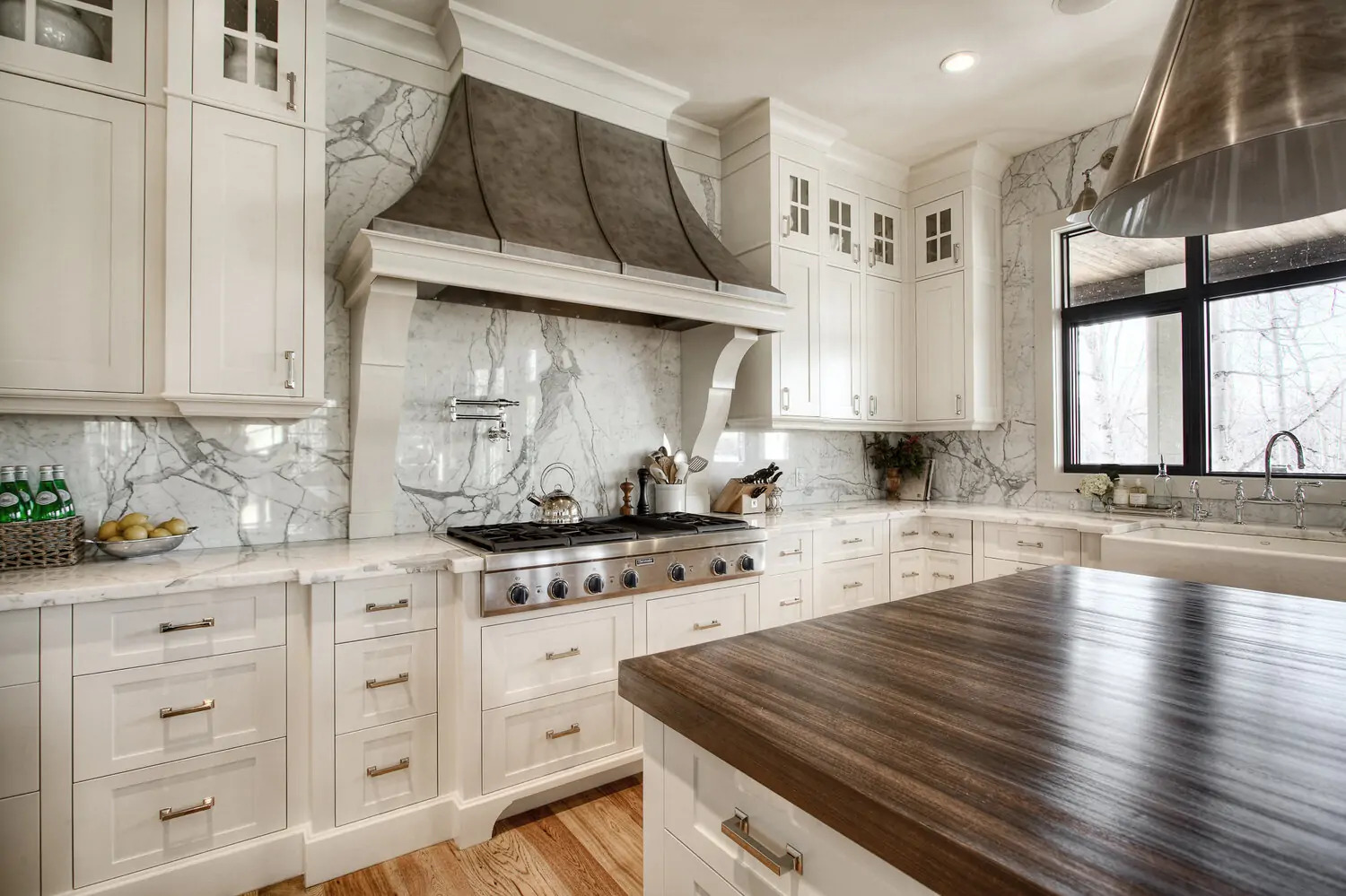
Luxury Kitchen Design Trends USA: A Definitive Engineering Reference
The configuration of high-end food preparation environments represents a complex intersection of structural engineering, behavioral science, and asset-class preservation. In the modern American luxury market, a kitchen is no longer merely a service zone; it serves as the primary node of the household, functioning simultaneously as a private laboratory, a formal entertainment stage, and a significant component of real estate valuation. Luxury Kitchen Design Trends USA. Achieving architectural resonance within these spaces requires a rigorous departure from the superficial styling common in mass-market publications, moving instead toward a systems-level understanding of domestic logistics.
The physical parameters of these spaces are currently shifting due to changing domestic workflows and the integration of professional-grade technology. What was once a static environment defined by fixed cabinetry and basic appliances is evolving into a fluid, multi-purpose zone that demands high levels of mechanical integration. Property owners and developers are increasingly focused on the longevity of these installations, prioritizing material integrity and structural adaptability over fleeting aesthetic fads. This shift necessitates a deeper dialogue concerning how architecture impacts long-term utility.
True mastery of high-end design lies in the ability to anticipate the second-order effects of every spatial decision. Relocating a plumbing stack or increasing the depth of a work island has implications that ripple through the foundation, the mechanical ventilation system, and the home’s overall thermal efficiency.
Understanding “luxury kitchen design trends usa”
The phrase “luxury kitchen design trends usa” is frequently reduced to simplistic stylistic observations—the prominence of a particular stone finish or a specific shade of cabinetry. However, from a professional design and construction perspective, this terminology encapsulates a broader set of structural and functional shifts. A true luxury environment is defined not by ornamentation, but by the seamless synthesis of ergonomic utility and durable infrastructure. The danger in viewing these shifts as mere “trends” is the risk of obsolescence; designs predicated on passing visual motifs often require significant capital to renovate when they fail to support daily operational demands.
Understanding these developments requires moving toward a multi-perspective analysis that accounts for the regional diversity of the American housing market. A luxury kitchen in an urban loft requires a different mechanical approach than one in a suburban estate, and these differences dictate the underlying design logic.
The Problem of Superficiality
When design media frames these shifts as purely aesthetic, it obscures the reality of residential construction, which is rooted in performance. A trend such as “hidden appliances” is often discussed in terms of visual minimalism, yet its true complexity lies in the mechanical requirements of specialized ventilation, heat dissipation, and custom millwork structural reinforcement.
The Role of Contextual Intelligence
The most successful high-end projects are those that demonstrate contextual intelligence—the ability to align a design with the building’s structural footprint and the owner’s operational needs. It is rarely beneficial to force a trendy configuration onto an existing floor plan that cannot support its mechanical load. Professional planning starts with identifying the constraints of the building’s plumbing, gas, and electrical systems before applying any stylistic layer. This approach ensures that the resulting environment is not only visually current but structurally robust enough to maintain its value for years to come.
The Historical Evolution of American Domestic Workspaces
The trajectory of American kitchen planning has moved from rigid, isolated service zones to interconnected, high-performance environments. Early twentieth-century designs were defined by strict separation, with food preparation relegated to the periphery of the home. This compartmentalization focused on minimizing the visibility of labor.
The late twentieth-century demand for the “open-plan” kitchen fundamentally altered these dynamics. As walls were removed to create a sense of expansive space, the kitchen became a highly visible, multi-functional hub. This transformation created new pressures for design coherence, forcing cabinetry to bridge the aesthetic gap between the culinary space and the living area.
Conceptual Frameworks for Spatial and Mechanical Planning
To evaluate high-end environments effectively, architects and managers utilize several foundational frameworks. These mental models help avoid the common pitfalls associated with prioritizing appearance over performance.
The Total Installed Cost Continuum
This model necessitates an analysis of every component through two lenses: the raw acquisition cost and the labor cost of installation and integration. A seemingly affordable material may become a liability if it requires complex, site-specific fabrication or ongoing specialized maintenance.
The Structural Fixity Principle
The principle of structural fixity dictates that costs rise exponentially as utility lines are moved further from their original structural bays. In estate planning, the wisest strategy involves maintaining the primary plumbing, gas, and electrical service positions. This preservation allows for more substantial investments in high-visibility finishes and specialized millwork, rather than wasting capital on invasive subfloor trenching and wall re-framing.
The Ergonomic Stratification Model
This model categorizes storage and surface usage based on vertical zones of accessibility. The primary ergonomic zone, located between the user’s knuckles and shoulders, should house the most frequently used tools and prep zones. Low and high zones are reserved for secondary or seasonal items.
Taxonomy of Design Paradigms and Architectural Variations
High-end environments are rarely uniform. They are defined by the intersection of configuration and material integrity. Below is a breakdown of common configurations and their inherent trade-offs.
| Configuration | Primary Utility Focus | Core Mechanical Challenge | Spatial Flexibility |
| Dual-Zone Scullery | High-Volume Prep | Ventilation and Drain Pathing | High |
| Architectural Millwork | Aesthetic Continuity | Structural Scribing/Leveling | Moderate |
| Stainless Steel Portal | Commercial Utility | Acoustic Dampening/Grounding | Low |
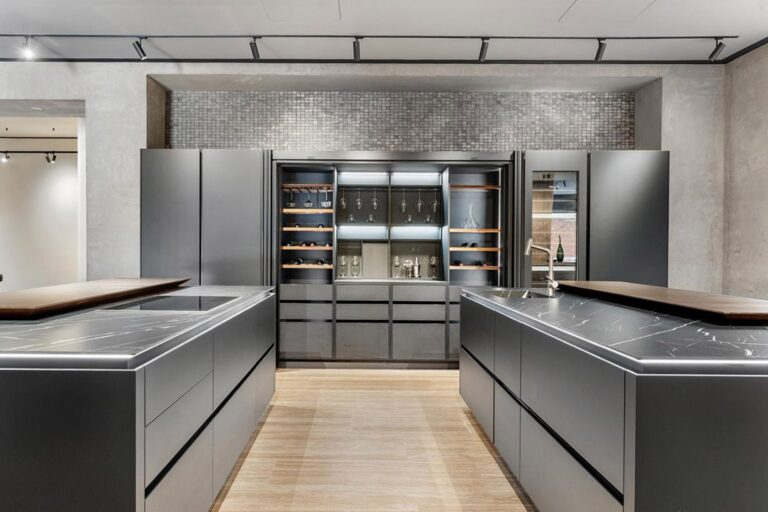
| Monolithic Stone-Clad | Sculptural Presence | Subfloor Load Reinforcement | Very Low |
| Modular Furniture System | Air/Light Integration | Utility Routing (Floor-Based) | High |
Realistic Decision Logic
The selection of a paradigm should be driven by the existing architectural context. For instance, a historic property with significant structural settling is poorly suited to a monolithic stone-clad configuration, which requires perfect rigidity to avoid cracking. Instead, such properties benefit from modular furniture systems that can accommodate slight floor deviations.
Real-World Spatial Scenarios and Structural Pressures
Scenario 1: The Urban High-Rise Integration
In a penthouse unit, space is at a premium. The owner desires a high-end feel but is limited by the building’s rigid core walls. The failure mode here is attempting a “standard” luxury layout that blocks traffic paths.
Scenario 2: The Estate-Scale Scullery
A suburban estate owner seeks to maintain the pristine appearance of a formal show kitchen. The design conflict arises if the show kitchen is forced to handle heavy cleaning and waste. The failure mode is the early degradation of high-end finishes. The second-order effect is addressed by implementing a dual-zone system—a high-performance, stainless-steel-clad scullery that manages heavy cleanup and storage, preserving the show kitchen for display and light entertainment.
The Risk Landscape and Taxonomy of Compounding Failure
The primary risk in high-end projects is the decoupling of aesthetic intent from structural reality. This often manifests in what is termed “casework failure,” where heavy integrated appliance panels are installed on cabinetry that has not been properly anchored into structural studs. Over time, the cyclical motion of appliance doors creates tension, causing the cabinetry to shift and leading to misaligned reveals and finish damage.
Another compounding failure mode is the “thermal fatigue” of finishes. When modern, high-output convection ranges are installed without professional-grade ventilation, the localized heat and moisture can delaminate cabinet veneers, even if the material is rated for “interior use.”
Governance, Lifecycle Maintenance, and Adaptation Cycles
A luxury environment should be treated as a mechanical system that requires periodic monitoring. Property owners who fail to establish a maintenance governance cycle often find that their investment loses its performance capability.
-
Semi-Annual Alignment Review: Checking cabinet hinge tension and drawer slide lubrication.
-
Mechanical Path Inspection: Verifying that ventilation ducts remain free of grease and that makeup air systems are operational.
-
Surface Integrity Logs: Periodic assessment of stone sealants and wood conditioners to prevent deep-level contamination.
Establishing a formal “adaptation trigger”—such as a five-year review of hardware performance—ensures that the kitchen remains an effective asset.
Spatial Performance Metrics and Analytical Evaluation
To evaluate success, one must look beyond visual metrics. Leading indicators of a successful high-end project include “clearance efficiency,” which measures the ease with which multiple occupants can navigate the space, and “mechanical headroom,” which measures the available capacity for future appliance upgrades without needing a full gut-renovation.
Qualitative signals, such as the tactile feel of hardware operation and the absence of noise during utility use (e.g., dishwasher or exhaust cycles), serve as reliable indicators of overall installation quality.
Industry Misconceptions and Structural Oversimplifications
-
The “Work Triangle” Obsession: This classic planning rule is frequently outdated. Modern high-end projects often rely on “zone-based” planning, which accommodates multiple cooks and diverse workflows better than a static triangle.
-
Filler Strips as Failures: A common misconception is that visible filler strips indicate poor design. In reality, they are essential engineering tools for allowing cabinetry doors to clear wall trim and corner obstructions.
-
High Cost Equals High Durability: Price is often a proxy for prestige, not necessarily performance. Many high-end imported veneers are less durable under extreme moisture conditions than high-quality domestic laminates.
-
Invisible Appliances are “Easy”: Concealing appliances is technically difficult; it complicates heat dissipation and complicates service access, requiring specialized design planning.
-
Stone is Maintenance-Free: Even the most expensive stone surfaces are porous and require disciplined sealing routines to avoid staining.
-
The “Total Kitchen” Myth: A single design style rarely fits every home; true luxury is customized to the specific structural and operational context of the property.
Conclusion
The pursuit of the best high-end environments in the American market is an exercise in restraint and engineering precision. It requires the owner and the design team to prioritize the structural integrity of the home and the long-term utility of the space above the immediate gratification of aesthetic trends. By treating the kitchen as a complex system of mechanical and structural relationships, property owners can ensure that their investments remain performative, valuable, and relevant for decades.