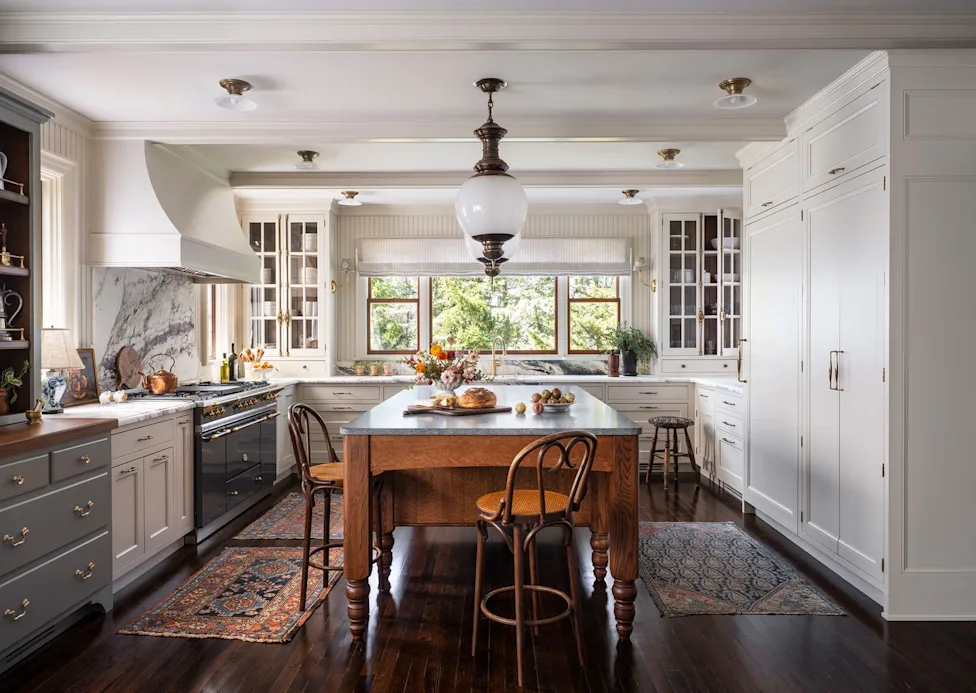
Historic Kitchen Restoration Destinations USA: A Definitive Guide
The restoration of an early-period residential workspace is rarely a purely aesthetic pursuit. It is, fundamentally, an act of archaeological engineering. Within the United States, the impulse to rehabilitate 18th, 19th, and early 20th-century culinary environments reflects a broader cultural commitment to maintaining the physical evidence of domestic evolution. Historic Kitchen Restoration Destinations USA. These spaces served as the original industrial hubs of the household; their configuration, material usage, and mechanical integration provide an unparalleled record of how prior generations navigated the basic necessities of life. Consequently, the approach to these projects must transcend casual interior design, requiring a methodology grounded in historical rigor and structural fidelity.
True restoration requires the reconciliation of two disparate realities: the preservation of historical integrity and the imposition of modern building codes. A project that ignores the latter is inherently unsustainable, failing the standards of safe occupancy. Conversely, a project that sacrifices historical detail for the convenience of contemporary appliance integration ceases to be a restoration, effectively becoming a pastiche.
This article examines the methodologies, logistical challenges, and conceptual frameworks defining the best historic kitchen restoration destinations usa. It serves as a comprehensive reference for those tasked with managing the rehabilitation of sensitive domestic structures, emphasizing the need for a disciplined, evidence-based approach. By prioritizing the structural and material preservation of these environments, we ensure that they continue to function as significant records of the American domestic experience, capable of enduring for further generations of occupants.
Understanding “historic kitchen restoration destinations usa”
In a professional architectural and conservation context, however, it refers to the specialized geographic and institutional clusters where expertise, archival resources, and craft-level knowledge converge to make complex rehabilitations possible. These “destinations” are not merely sites; they are ecosystems comprising historical societies, material conservation labs, architectural conservators, and skilled millwrights. Relying on such resources is essential, as the restoration of a 1790 hearth or a 1920s integrated butler’s pantry demands knowledge that is rarely available through conventional construction channels.
Common misunderstandings regarding these resources include the assumption that historical materials are inherently fragile and thus unsuitable for active use. In truth, many period-appropriate materials—such as high-density stone, hand-forged iron, or quarter-sawn oak—possess an inherent durability that outstrips their modern, mass-produced counterparts. The risk of oversimplification is high: treating a historic kitchen restoration as a standard remodeling project often results in the irreparable loss of original fabric. A true restoration seeks to understand the “why” behind original design decisions, ensuring that subsequent interventions serve to enhance, rather than overwrite, the historical record.
The Multi-Perspective Approach to Conservation
Achieving authentic results requires viewing the kitchen from three distinct perspectives: the structural, the material, and the functional. The structural perspective examines how the floor framing, chimney mass, and ventilation stacks interact with the building’s overall envelope. The material perspective focuses on the sourcing of lime-based plasters, specific species of old-growth timber, and hand-wrought hardware.
Risks of the Pastiche Approach
The most critical danger in contemporary restoration is the “theme kitchen” effect, where historical elements are applied as decorative overlays. This approach fails to provide the structural or systemic improvements required for modern occupancy, resulting in an environment that is neither a faithful recreation nor a reliable piece of infrastructure. Professional practitioners avoid this by documenting the original spatial hierarchy and mechanical pathways, using this data as the primary guide for all intervention. This discipline is what distinguishes a professional restoration project from an aesthetic renovation.
The Evolution of American Domestic Culinary Architecture
The domestic kitchen in America has never been a static concept. In the colonial period, the kitchen was the central hearth of the home, defined by massive masonry chimneys, exposed joists, and a high degree of multifunctionality. Furniture was typically freestanding; cabinetry, as a built-in feature, was virtually non-existent until the late 19th century. This period prioritized heat management and the proximity of fuel sources, leading to layouts that seem intensely localized by modern standards.
As we move into the 19th century, the proliferation of cast-iron stoves began to decentralize the kitchen, allowing for more specialized work areas and the introduction of simple storage pantries. The turn of the 20th century saw the most dramatic shift, with the “scientific kitchen” movement. This era focused on efficiency, hygiene, and the early adoption of white, washable surfaces—the architectural precursor to the modern built-in kitchen.
Conceptual Frameworks for Heritage Rehabilitation
To navigate the complexities of heritage projects, practitioners utilize specific mental models that prioritize the long-term structural and historical viability of the asset.
The Integrity-Utility Balance Model
This framework requires an assessment of every element in the space: is it historically significant, and does it provide necessary modern utility? Elements that are both—such as original masonry or primary timber framing—are prioritized for preservation. Elements that lack historical value but impede utility are removed with careful documentation. This model creates a clear, evidence-based roadmap for project scope, preventing the common issue of over-restoration or under-preservation.
The Reversibility Principle
In advanced conservation, all modern interventions must be theoretically reversible. This means the installation of modern plumbing, electrical systems, or cabinetry should not rely on the destruction of original historical fabric. By employing floating systems or concealed utility chases, the practitioner ensures that if future technology or preservation standards change, the original architecture remains undamaged beneath the current intervention.
The Forensic Documentation Requirement
No physical intervention should take place without a complete forensic record of the original state. This includes detailed measured drawings, material sampling, and photographic evidence of internal framing or hidden mechanical pathways. By treating the project as an archaeological site, the architect ensures that the data is preserved even if the physical structure must be altered to meet modern standards.
Taxonomy of Restoration Paradigms and Material Standards
The choice of restoration paradigm dictates the material palette and the level of structural intervention.
| Paradigm | Primary Objective | Material Standard |
| Strict Conservation | Preservation of original fabric | Minimalist/Stabilization |
| Adaptive Reconstruction | Restoring lost historical function | Period-accurate sourcing |
| Systemic Integration | Blending modern utility and history | Concealment/Custom Millwork |
| Archaeological Inquiry | Documentation of hidden history | Non-destructive diagnostics |
Realistic Decision Logic
The selection of a paradigm is dictated by the building’s structural stability and the degree of original material loss. A structure that retains 80% of its original fabric should follow a Strict Conservation paradigm. This allows for the recreation of lost architectural elements based on historical precedent, effectively restoring the home to its period-correct potential.
Real-World Scenarios and Structural Constraints Historic Kitchen Restoration Destinations USA
Scenario 1: The Masonry Hearth Stabilization
A 1780s farmhouse kitchen requires the stabilization of a deteriorating central fireplace mass. The failure mode involves inappropriate repointing with modern Portland cement, which is harder than original lime mortar and will cause the historic brickwork to crack under thermal load. The correction requires a specialized masonry analysis to match the historic lime-sand ratio, ensuring the structure can breathe and flex as it did originally.
Scenario 2: Utility Integration in Post-and-Beam Frames
A client desires modern appliance integration in a home where all original floor joists are exposed. The structural constraint is that joists cannot be drilled for plumbing without compromising the building’s integrity. The second-order effect is managed by designing an elevated subfloor or using hidden utility chases concealed within newly constructed perimeter pantries, ensuring the original timber remains untouched.
Capital Allocation, Logistics, and Resource Management
Restoration is a capital-intensive process where costs are heavily weighted toward professional labor and specialized material procurement.
| Cost Category | Primary Driver | Variability |
| Architectural Conservation | Forensic analysis/Planning | Moderate |
| Artisanal Fabrication | Hand-wrought hardware/Millwork | High |
| Systemic Infrastructure | Specialized utility integration | High |
| Material Sourcing | Rarity of reclaimed items | High |
Effective projects utilize a multi-phase financial strategy, prioritizing structural stabilization and moisture management before allocating capital to high-visibility finishes.
Diagnostic Tools, Preservation Strategies, and Support Systems
The successful execution of projects within historic kitchen restoration destinations usa relies on the use of specialized tools and diagnostic methodologies.
-
Non-Destructive Moisture Mapping: Identifying hidden leaks or rising damp within historic masonry or timber, preventing decay before it becomes visible.
-
X-Ray Structural Analysis: Mapping internal framing and iron fasteners without destroying plaster or lath, essential for planning utility routes.
-
Archival Material Matching: Using spectroscopy to identify the original chemical composition of paints, mortars, and finishes to ensure precise material compatibility.
-
Laser-Based Digital Fabrication: Allowing for the creation of custom millwork that precisely fits the irregular contours of historic walls, reducing the need for destructive scribing.
The Risk Landscape and Taxonomic Failure Modes
Restoration projects face compounding risks, often stemming from the misapplication of modern materials to historic substrates.
-
The Vapor Trap Failure: Applying modern paints or sealants to historic wood or plaster prevents moisture from escaping, leading to internal rot or finish failure.
-
Differential Expansion: Using modern materials that expand and contract at different rates than historic substrates, leading to joints cracking and structural separation.
-
Invasive Infrastructure: The “gut and replace” mentality that destroys original framing and plaster to accommodate modern standard-size appliances, destroying the historical value of the home in the process.
Project Governance, Maintenance, and Long-Term Adaptation
Restoration requires an ongoing cycle of governance, as the building will continue to react to environmental conditions.
-
Seasonal Review Cycles: Monitoring the building’s performance through extreme temperature shifts to detect signs of foundation movement or finish stress.
-
Material-Specific Maintenance: Implementing protocols for the care of hand-wrought hardware, lime-based plaster, and old-growth timber, which require different care than modern counterparts.
-
Adjustment Triggers: Establishing clear thresholds for intervention—such as specific crack widths or moisture levels—that necessitate immediate professional consultation.
A layered checklist should be provided to every homeowner, outlining the specific operational requirements of their unique historic environment.
Measurement, Performance Signals, and Analytical Documentation
Measuring the success of a restoration requires both quantitative and qualitative data.
-
Performance Logs: Tracking the efficacy of modern utility integrations—such as the quietness and speed of ventilation systems—over time.
-
Structural Stability Monitoring: Using calibrated digital sensors to track any movement in original timber frames following the introduction of modern mechanical loads.
-
Archival Documentation Examples:
-
A detailed forensic report on original joinery techniques.
-
A comprehensive material-sourcing log for all reclaimed or replica elements.
-
An ongoing journal of maintenance actions taken since project completion.
-
Industry Misconceptions and Structural Oversimplifications
-
The “Authenticity” Trap: Authenticity is not synonymous with perfection; historic kitchens were often utilitarian and asymmetrical, which are their defining characteristics.
-
Appliance Uniformity: Historic kitchens do not require “standard” appliances; high-performance professional equipment can be integrated using custom cabinetry to preserve the space’s character.
-
The Cost-Equivalence Myth: Restoration is more expensive than standard renovation because it requires higher levels of labor, planning, and material sourcing.
-
The “Luddite” Fallacy: Restored kitchens are fully capable of hosting modern culinary workflows if the mechanical systems are designed with high-capacity requirements.
Strategic Synthesis and Future Pathways
The best historic kitchen restoration destinations usa are those that foster a synthesis of traditional craft and modern engineering. As we move forward, the role of the conservation professional will become increasingly vital in managing the intersection of our built heritage and the modern standard of living. Future success in this field depends on our ability to train the next generation of millwrights, masons, and architects who understand that restoration is not a static task, but a continuous responsibility. By maintaining this discipline, we ensure that the kitchen—the heart of the American domestic space—continues to serve as a meaningful and authentic record of our collective history, proving that the most sustainable architectural practice is the one that preserves what we already possess.