How to Reduce Custom Cabinetry Expenses: An Editorial Guide
The specification of custom cabinetry represents one of the most significant capital investments in a residential renovation. Unlike modular or semi-custom units, bespoke cabinetry is designed to reconcile the unique architectural constraints of a space with the specific functional requirements of the inhabitants. This process is inherently labor-intensive, requiring a high degree of craftsmanship, precise material selection, and sophisticated engineering to ensure structural longevity. How to Reduce Custom Cabinetry Expenses. Because these components form the permanent framework of a kitchen or living area, the decision-making process during their development has profound, long-term implications for both the home’s operational efficiency and its aesthetic coherence.
Managing these expenditures requires more than a simple search for cheaper materials; it demands a critical evaluation of design complexity, labor time, and the underlying mechanical systems that constitute the cabinet’s form. Without a clear understanding of what drives the price of millwork, homeowners often find themselves paying for “complexity-induced premiums”—design elements that offer diminishing returns in either utility or durability.
Achieving a balance between high-quality fabrication and budget discipline necessitates a strategic approach. It requires the homeowner to view the cabinetry not merely as an aesthetic finish, but as a complex engineered system. This guide provides a rigorous framework for navigating these choices, moving beyond surface-level savings to address the structural and design decisions that truly dictate the final expenditure.
Understanding “how to reduce custom cabinetry expenses”
Determining “how to reduce custom cabinetry expenses” begins with the recognition that cost is primarily a function of labor-time and material complexity. A common misunderstanding in the residential market is the belief that savings can be achieved simply by choosing a less expensive wood species or a simpler hardware brand. While these choices do have an impact, they often represent only a fractional reduction in the total invoice. True cost management requires a shift toward rationalizing the design itself. Oversimplification—such as eliminating structural support to save on panels or choosing a fragile finish—creates significant risks for the long-term integrity of the installation.
A multi-perspective evaluation acknowledges that bespoke cabinetry is an interface between the home’s structure and its daily usage. The “best” approach to cost reduction is not the pursuit of the lowest price, but the elimination of unnecessary architectural and mechanical complexity. For example, a designer might specify highly custom, non-standard drawer depths that require specialized machinery and excess labor to fabricate. A more rational approach would align the design with standard industry dimensions, which significantly reduces fabrication hours while maintaining the overall aesthetic vision. Understanding this nuance is essential for anyone seeking a durable, high-performance outcome without overextending their financial resources.
The Impact of Design Rationalization
The most effective method for controlling expenditure is early-stage design rationalization. This involves reviewing the elevations to identify where custom details are being used purely for decorative rather than structural reasons. In many cases, these elements can be simplified or standardized without degrading the visual impact of the room.
The Role of Fabrication Efficiency
Fabrication efficiency is the silent engine of cost. When designers work closely with cabinetmakers to understand the limitations of their shop equipment and their preferred construction techniques, they can design “with the grain” of the production process. A design that is optimized for standard sheet goods and straightforward joinery is almost always more cost-effective than a design that forces a cabinetmaker to invent new methods for every unit. This alignment requires a level of professional communication that prioritizes the collaborative nature of the trade.
The Evolution of Custom Millwork and Modern Fabrication
Historically, custom millwork was defined by the manual assembly of wood in a local shop, where every joint was cut by hand. This required immense skill and time, making bespoke cabinetry a luxury reserved for the highest-end estates. Over the last three decades, however, the industry has undergone a technological shift. Today, even high-end bespoke shops utilize automated technology to increase precision and reduce the manual labor required for the basic carcass construction.
The Shift Toward Precision Engineering
This transition toward technology-enabled fabrication has not replaced the need for skilled labor; rather, it has shifted the craftsman’s role toward final assembly, finishing, and complex custom detailing. Consequently, when looking for ways to reduce cost, one should focus on those areas where manual labor is most intensive, rather than attempting to minimize the structural quality provided by modern production methods.
Conceptual Frameworks for Cabinetry Value
Effective decision-making in cabinetry requires the application of mental models that prioritize durability and long-term value.
The Structural Integrity Hierarchy
This model classifies every cabinet component by its role in the system: Load-Bearing (carcass, base structure), Interface (hardware, hinges, drawer slides), and Aesthetic (doors, drawer fronts, finishes). Investing in high-quality hardware and a robust carcass is the only way to ensure the long-term utility of the unit; economizing in these areas is a recipe for premature failure.
The Parametric Complexity Index
This model evaluates each design element on a scale of 1 to 10 based on the amount of custom fabrication time it requires. High-index items—such as curved faces, intricate moldings, or non-standard opening mechanisms—carry an exponential cost premium. By keeping the average complexity index of the project in a moderate range, homeowners can afford to include a few high-value custom elements while maintaining overall budget control.
The Standardized Core Principle
This principle advocates for using standardized dimensions for the internal cabinet boxes while reserving the “custom” effort for the outer skin and functional layout. By utilizing widely available, high-performance internal storage components, the project can benefit from the economies of scale associated with those items, while the exterior remains perfectly tailored to the architectural vision.
Taxonomy of Design Drivers and Expenditure Categories
The factors influencing the cost of custom cabinetry can be classified as follows:
| Expenditure Category | Cost Driver | Complexity Level |
| Material Raw Stock | Wood species, core type (plywood vs. MDF) | Low-Moderate |
| Mechanical Hardware | Hinges, slides, lift mechanisms | Moderate-High |
| Fabrication Labor | Shop time, assembly, and custom joinery | High |
| Surface Finishing | Type of paint/stain, specialty applications | Moderate |
| Design/Engineering | Architectural integration and detailing | High |
Realistic Decision Logic
A high-traffic kitchen requires the highest level of investment in hardware and material durability. Conversely, a formal dining room or a built-in library cabinet may not require the same degree of mechanical resilience, allowing for a reallocation of budget toward more sophisticated exterior finishes. The key is to match the technical performance of the cabinets to the actual operational demands of the space, avoiding the “over-specification” that often leads to bloated invoices.
Real-World Scenarios: Trade-offs and Constraints How to Reduce Custom Cabinetry Expenses
Scenario 1: The Kitchen Island Complexity
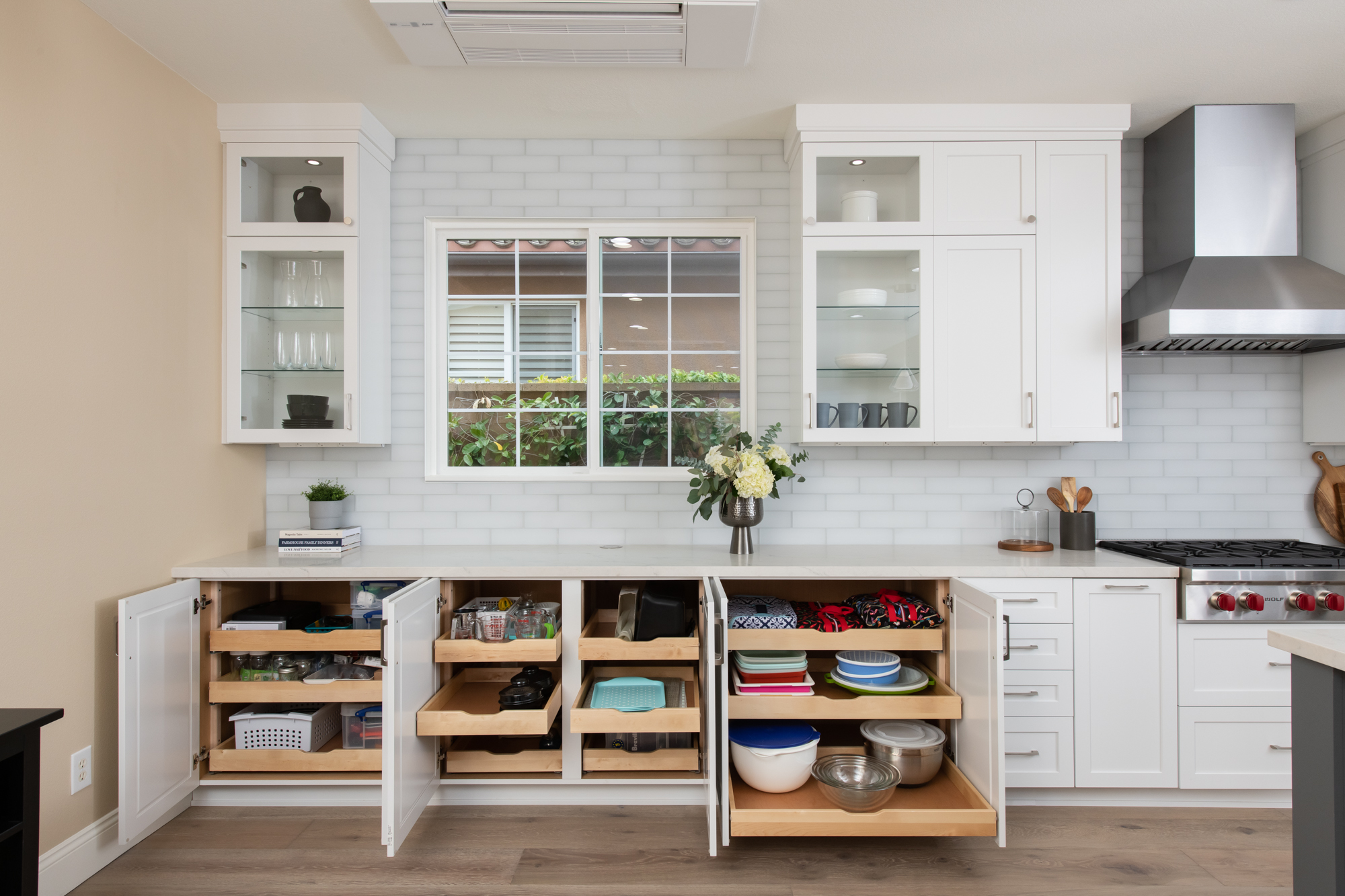
A client desires a large kitchen island with an intricate, custom-molded base. The failure mode involves the manual labor required to produce the custom molding, which doubles the fabrication cost for that unit. The mitigation strategy is to simplify the base profile to a design that utilizes standard-width, pre-fabricated molding components, achieving a similar visual weight with significantly less labor time.
Scenario 2: The Integrated Appliance Requirement
A project requires perfectly flush, “no-reveal” integration for a set of high-end appliances. This necessitates extreme precision and custom cabinet modification. The second-order effect is a substantial increase in installation time and shop engineering. The mitigation strategy involves choosing appliances designed for standard inset applications, which reduces the cabinetry engineering complexity without sacrificing the desired “seamless” look.
Resource Dynamics and the Cost-Utility Matrix
Controlling the budget for custom cabinetry requires an understanding of the relationship between cost and utility.
| Investment Focus | Potential Savings | Long-Term Trade-off |
| Internal Box Material | Moderate | Potential reduction in rigidity over time |
| Hardware Brand/Model | High | Increased frequency of mechanical failure |
| Cabinet Design Geometry | Very High | Loss of unique architectural aesthetic |
| Finish Techniques | Moderate | Potential for easier field repair |
Investment should follow the principle of “repairable value.” By prioritizing the structure and the hardware, homeowners create a system that can be updated in the future.
Strategies for Value Optimization
Several actionable strategies exist for optimizing the value of custom cabinetry:
-
Procurement Transparency: Requesting an itemized quote that separates material costs from labor, enabling a clearer view of what the project is paying for.
-
Component-Level Specification: Specifying high-performance hardware (e.g., Blum, Grass) directly rather than leaving it to the cabinetmaker, which often results in better pricing and performance.
-
Design Synchronization: Ensuring that the cabinetry design is fully finalized before the fabrication shop begins work to avoid the high costs of “change orders” during production.
-
Finish-Outside-Shop: Considering a professional on-site spray-finish for the cabinets, which can sometimes be more cost-effective than having the shop apply complex, multi-stage factory finishes.
The Risk Landscape: Quality Compromises and Failure Modes
Attempts to reduce expenses can easily lead to compromised quality if not managed correctly.
-
The Veneer/Substrate Failure: Choosing low-cost particleboard substrates for high-moisture areas (e.g., sink bases) leads to inevitable material swelling and decay.
-
The Hardware Bottleneck: Installing budget-tier drawer slides in a high-frequency kitchen environment will result in mechanical failure within 3-5 years, negating any initial savings.
-
The Finish Fragility: Opting for a low-cost, single-stage finish on high-use surfaces like doors and drawer edges results in rapid wear, chipping, and a diminished visual appearance.
Governance, Review Cycles, and Long-Term Adaptation
A successful cabinetry project requires active governance throughout its lifecycle.
-
Engineering Review: A formal review cycle at the 50% design mark, where the architect, homeowner, and lead fabricator verify all dimensions and mechanical specifications.
-
Material/Finish Sign-off: Requiring physical samples of all materials and finishes to be approved on-site, under actual lighting conditions, to prevent costly remakes.
-
Thresholds for Revision: Establishing clear “freeze dates” for the design; any changes made after these dates should be acknowledged as carrying a cost premium.
Maintaining a clear file of all shop drawings and hardware specifications is essential for long-term maintenance, allowing for the easy replacement of parts as needed.
Measurement, Performance Signals, and Analytical Documentation
Success in cabinetry management is tracked through both qualitative and quantitative indicators.
-
Leading Indicators: The frequency of RFI (Request for Information) submissions between the designer and the shop, and the adherence to the initial design freeze dates.
-
Lagging Indicators: The final “cost per linear foot” versus initial estimates, and the frequency of post-installation adjustments required for doors and drawers.
-
Qualitative Signals: The precision of door reveals, the quality of the finish application, and the tactile performance of the hardware.
Every project should culminate in a documentation binder containing the shop drawings, hardware list, and care-and-maintenance guidelines, providing a clear roadmap for the future.
Industry Misconceptions and Economic Oversimplifications
-
The “Local Shop” Fallacy: The assumption that a small, local shop is always less expensive than a larger, technologically advanced manufacturer. Larger shops often have better leverage on material pricing and superior labor efficiency.
-
The Material Obsession: Believing that specifying solid wood for every component makes the cabinet better. Solid wood is unstable; high-quality, cabinet-grade plywood is actually superior for structural panels.
-
The “Custom is Always Better” Myth: Custom cabinetry is the right choice for unique architecture, but it is not necessary for standard kitchen layouts where semi-custom or high-end modular units can perform equally well.
-
The Hardware Neglect: Viewing hinges and slides as secondary. In cabinetry, the mechanical systems are the primary determinants of the user experience and the cabinet’s lifespan.
Strategic Synthesis and Future Engineering Pathways
Reducing cabinetry expenses is not about making the project “cheaper”; it is about making it “smarter.” By ruthlessly eliminating non-functional complexity and aligning the design with the practical realities of fabrication, homeowners can achieve a result that is both aesthetically superior and economically responsible. The future of the industry lies in the further integration of parametric design tools, which will continue to reduce the cost of bespoke work by increasing the efficiency of the shop-to-site workflow.