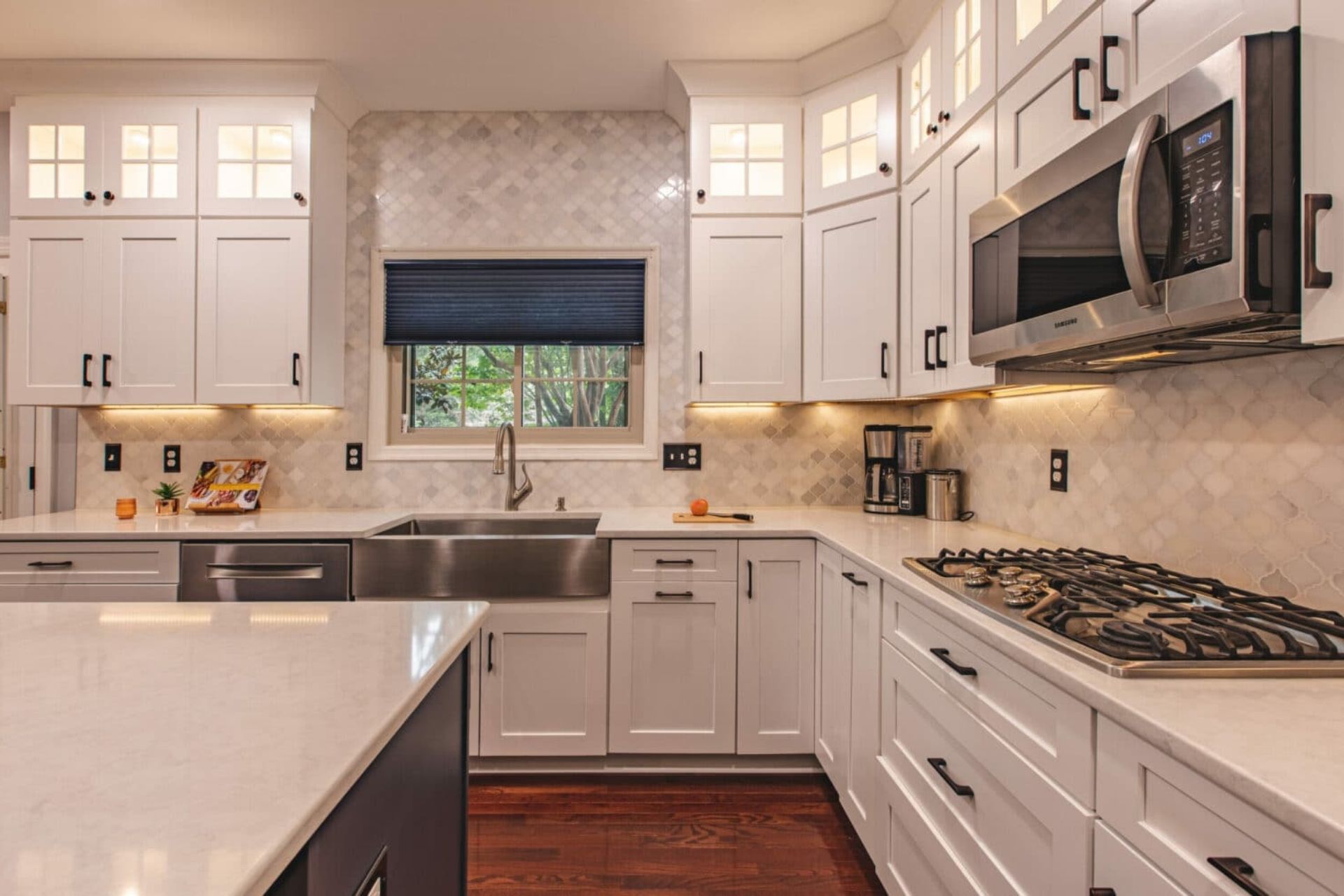
How to Reduce Kitchen Remodeling Costs: Engineering & Capital Allocation
The economic optimization of structural interior modifications requires a detailed understanding of construction logistics, material supply chains, and engineering trade-offs. Within residential asset management, executing a comprehensive space upgrade represents a major financial intervention. It is a complex balancing act where long-term asset value must match immediate capital liquidity. Reducing expenditures on a project of this scale is rarely achieved by simply selecting cheaper decorative finishes. It requires a systematic approach to structural design, utility layout, and labor scheduling.
Historically, residential remodeling budgets were calculated using simple square-foot averages. This crude method often overlooked custom site variables, hidden structural problems, and regional differences in skilled trade wages. Modern building science has moved past these rough estimates. It recognizes that every physical change inside a home triggers a chain of secondary costs throughout the project. Moving a structural wall, for example, alters the overhead load distribution and requires rerouting internal wiring and plumbing lines.
A successful budget strategy relies on identifying these hidden cost drivers before construction begins. Forgetting to track mechanical dependencies or skipping a detailed subfloor inspection can cause significant cost overruns. These setbacks strain cash reserves, delay completion timelines, and lower the return on investment for the property. Consequently, managing project costs effectively demands looking past basic retail showroom promotions. Planners must focus on construction sequencing, value engineering, and strategic procurement.
This analysis details the technical frameworks, financial models, and risk management strategies used to optimize renovation budgets. By focusing on asset life cycles, footprint preservation, and smart purchasing models, this guide serves as an authoritative reference. It helps architects, construction managers, and property owners minimize unnecessary expenses while building high-utility culinary spaces.
Understanding “how to reduce kitchen remodeling costs”
Within professional interior architecture and construction management, however, the concept demands a far more precise definition. It represents the systematic optimization of structural design and infrastructure layout to maximize functional utility per dollar spent.
A complete value analysis looks past initial shelf prices to evaluate the total installed cost of every material and system. A specific finish option may look like a bargain in a product catalog, yet require highly specialized labor or custom tools that drive up final costs. Therefore, understanding how to reduce kitchen remodeling costs requires analyzing the hidden labor and infrastructure dependencies of different design choices.
Planners frequently mistake lower procurement prices for genuine project savings. Opting for low-grade, mass-produced storage units can lower immediate capital needs, but it often increases on-site installation labor because workers must shim and reinforce uneven boxes. Conversely, selecting high-quality modular units built to precise dimensions simplifies installation, reducing field labor costs and improving long-term durability. Navigating these choices requires a clear framework that balances upfront costs against project assembly times.
The Structural and Economic History of Interior Renovations
The financial management of home renovations was largely unstandardized prior to the twentieth century. Early residential adjustments relied on local carpenters and general craftsmen who worked under loose, unstructured labor arrangements. Budgets were highly unpredictable, shifting frequently based on immediate material availability and manual cutting speeds. This erratic approach changed with the mass production of building materials and the standardization of residential construction codes.
The first major shift toward predictable renovation economics occurred in the mid-twentieth century with the development of modular cabinetry and standardized appliance sizes. This industrialization allowed cabinet makers to build units in uniform dimensional steps, lowering custom manufacturing costs and making project pricing more transparent. This transformation changed home remodeling, shifting it from a highly speculative craft into a predictable assembly process with clear material costs.
During the building boom of the 1980s and 1990s, the introduction of home equity lines of credit (HELOCs) altered how residential renovations were funded. Access to cheap capital led to a period of expansive remodeling projects where footprint size and visual impact were prioritized over efficient design. However, because labor and energy costs were relatively low, budgets often absorbed hidden installation mistakes and poor material choices without immediate financial failure.
Today, budget planning faces a major shift driven by volatile material prices, scarce skilled labor, and stricter energy efficiency codes. Modern open-concept floor plans have removed the simple, independent walls of older homes, meaning any changes to a kitchen footprint can alter the structural and climate systems of adjacent living areas. This interconnectedness requires project managers to use real-time pricing databases, advanced material tracking, and automated trade scheduling to manage costs effectively.
Financial Frameworks and Value-Engineering Models
To successfully analyze and execute budget strategies across diverse property types, planners must move past casual rules of thumb. They should rely on established financial models rooted in construction economics.
The Footprint Fixity Model
The Footprint Fixity Model operates on a simple rule of infrastructure preservation: the financial cost of a renovation scales non-linearly with every inch a utility connection moves away from its original wall location.
This framework requires mapping out existing sewer stacks, gas supply lines, and high-voltage electrical circuits before drawing new floor plans. By keeping major appliances and sinks within their original structural boundaries, planners eliminate expensive wall trenching and subfloor modifications, preserving capital for high-visibility surface upgrades.
The Total Installed Cost Continuum
The Total Installed Cost Continuum requires analyzing every material specification through two separate cost variables: raw material purchase price and required installation labor hours.
Materials that seem inexpensive on the showroom floor can become financial burdens if they require specialized on-site fabrication, custom adhesives, or complex subsurface leveling. This framework helps teams identify options that lower field installation hours, ensuring that upfront material savings are not wiped out by rising labor invoices.
The Asset Lifecycle Valuation Matrix
The Asset Lifecycle Valuation Matrix balances immediate renovation expenses against the long-term operational costs of the home. This financial model separates short-term visual upgrades from long-term infrastructure improvements based on their durability and performance.
By prioritizing resilient, low-maintenance components—like high-efficiency LED drivers or non-porous composite counters—planners reduce future maintenance costs, ensuring that immediate budget cuts do not create chronic repair bills down the road.
The Logistical Bottleneck Matrix
The Logistical Bottleneck Matrix measures the financial cost of project downtime caused by uncoordinated trade scheduling. In residential construction, a delay by one specialized subcontractor—such as a stone fabricator or rough-in electrician—stalls all subsequent tasks, driving up management costs and extending project timelines.
Applying this framework helps managers create a highly synchronized project schedule, ensuring that skilled trades enter and exit the site efficiently without interfering with one another.
Taxonomy of Capital Preservation Strategies
Renovation cost management plans are not uniform. To deploy capital and structural resources effectively, cost-reduction strategies must be categorized by their design complexity, structural impact, and technical execution.
Preservation of Infrastructure Layouts
This strategy focuses on keeping the existing plumbing, electrical, and gas distribution paths completely intact. Sinks, ranges, and integrated dishwashers stay precisely where they were originally hooked up, avoiding any alterations to the home’s framing cavities.
The primary advantage is a massive reduction in plumbing invoices and permitting fees, though it prevents designers from making major changes to inefficient traffic flows.
Structural Refacing and Re-Skinning
Refacing involves keeping the existing, structurally sound cabinet boxes in place while replacing only the doors, drawer fronts, and external finish panels. This approach upgrades the room’s visual style without tearing out the underlying casework framing.
This strategy lowers raw material procurement costs and speeds up project timelines, but it cannot fix warped cabinet boxes or alter poor interior shelf layouts.
Material Grade Substitution
This methodology replaces high-cost, exotic materials with high-performance engineered alternatives that mimic premium aesthetics at a lower price point. Examples include using premium engineered quartz instead of rare quartzites, or picking high-density plywood boxes over custom hardwoods.
This approach preserves design choices while lowering raw material expenses, though it requires a careful eye to verify the durability ratings of the alternative materials.
Direct Sourcing and Logistics Management
This strategy removes middleman markups by purchasing plumbing fixtures, decorative tile, and lighting systems directly from primary manufacturers or commercial distributors. The project owner or manager handles the logistics, storage, and inspection of these components independently.
While this lowers material markups significantly, it shifts the burden of coordinating deliveries and handling damaged freight onto the owner, increasing management risks.
Sweat-Equity Labor Allocation
This approach uses the property owner’s manual labor for non-structural, low-risk tasks like cosmetic demolition, wall painting, and site cleaning. This removes professional labor fees for basic tasks, allowing capital to be shifted to certified mechanical trades.
The main trade-off is a longer project timeline, as DIY labor is rarely as fast or efficient as a professional crew.
Modular Framework Standardizing
This methodology designs the entire kitchen footprint around standard, mass-produced cabinet dimensions, avoiding any custom cabinet configurations or unique width adjustments.
This approach maximizes volume discounts and cuts down on custom manufacturing wait times, though it can leave small gaps that require careful finish carpentry and trim pieces to blend in smoothly.
| Capital Preservation Class | Primary Budget Benefit | Core Technical Trade-off | Implementation Complexity | Labor Savings Potential | Asset Value Multiplier |
| Layout Fixity | Eliminates utility rerouting fees | Restricts spatial workflow modifications | Low | High | Baseline (1.0x) |
| Cabinet Refacing | Lowers raw woodwork procurement | Preserves original layout limits | Moderate | High | Moderate (1.2x) |
| Material Substitution | Balances raw material expenses | Requires careful verification of wear limits | Moderate | Low | High (1.5x) |
| Direct Sourcing | Cuts middleman markup margins | Shifts delivery liability onto owner | High | Zero | Moderate (1.1x) |
| Sweat Equity | Lowers basic labor invoices | Extends project execution timelines | Variable | High | Variable |
| Modular Design | Maximizes production discounts | Requires precise filler strip carpentry | Low-Moderate | Medium | High (1.4x) |
Realistic Decision Logic
Choosing the appropriate value strategy requires analyzing the property’s age and existing structural integrity. A home with straight, plumb walls and functional mechanical systems should use cabinet refacing and material grade substitution to refresh the space efficiently.
An older property with out-of-level floors and failing plumbing lines requires a layout fixity strategy to protect capital, allowing the budget to absorb necessary infrastructure repairs without exhausting financial reserves.
Real-World Budget Scenarios and Structural Pressures
Scenario 1: The Multi-Perspective Layout Dilemma
In a suburban home with a 150-square-foot kitchen, the property owner wants to improve traffic flow without overspending. The initial design proposal recommends a total floor-plan overhaul, moving the main sink to a new central island and shifting the gas range to the opposite wall.
The plumbing and electrical bids for this work total $14,000 due to the need to trench through floor joists and extend gas supply lines. To lower these costs, the value-engineering plan applies the Footprint Fixity Model.
Structural Refinement Options
By keeping the sink and range in their original structural positions, the layout stays fixed, but the cabinetry configuration is optimized. The plan swaps out blind corner bases for modular pull-out shelves and replaces an old closet pantry with a continuous wall of utility cabinets.
This approach matches the storage capacity of the open-concept plan while completely eliminating the expensive utility relocation fees.
Handling Unforeseen Field Anomalies
During the cabinet demolition phase, the field crew discovers a slow moisture leak behind the original sink wall that has rotted a section of the sill plate. Because the layout fixity strategy saved $14,000 on plumbing modifications, the budget easily absorbs the $2,500 carpentry repair without stalling the project or requiring emergency financing.
Scenario 2: The Urban High-Rise Procurement Challenge
An urban condominium features a small galley kitchen with solid concrete subfloors and strict building delivery hours. The owner wants to upgrade the space using high-end materials, but face-framed custom cabinets and imported natural stone slabs would push the project $18,000 over budget.
The project manager applies material grade substitution and modular standardizing to balance the expenses.
Streamlining Material Logistics
The custom cabinet order is swapped for a high-quality frameless European modular cabinet system that uses standard sizing increments. These units are flat-packed for easy transport up the building’s small service elevator, lowering delivery labor fees significantly.
To achieve the desired aesthetic without the cost of rare stone, the manager sources an engineered quartz slab that mimics natural veining. This material requires no on-site chemical sealing, lowering installation labor while providing a durable, non-porous workspace.
Overcoming Structural Delivery Bottlenecks
The building management limits loud construction work to a tight four-hour window each day, which would inflate professional installation costs for custom woodwork.
Because the flat-packed modular units feature pre-drilled dowel alignments, the assembly crew installs the entire cabinet run in half the time of a custom build, keeping the project on schedule within the building’s tight operational rules.
Scenario 3: The Historic Timber-Framed Renovation
A late-nineteenth-century historic home features a spacious kitchen with uneven floor joists that sag up to three inches across the room. The initial plan specifies heavy natural quartzite countertops and deep, custom hardwood cabinet boxes.
Placing these massive materials onto the weak floor structure would require installing a new structural steel support beam in the basement, an engineering task budgeted at $22,000.
Structural Weight Mitigation
To preserve the historic structure without an expensive foundation project, the design team shifts to a lightweight material profile. The custom hardwood boxes are replaced with lightweight, furniture-grade plywood cabinets, and the heavy stone tops are swapped for a thin, high-performance porcelain slab format mounted on a level sub-base.
Managing Local Permitting Codes
The thin porcelain format cuts the structural dead load by more than half, allowing the historic floor joists to handle the weight safely without structural reinforcement.
Additionally, because the project avoids structural modifications to the home’s foundation, it bypasses a complex historic district building review, saving thousands in engineering fees and months of administrative delays.
Comprehensive Financial Architecture and Resource Allocation
Evaluating the true financial landscape of a kitchen renovation requires moving past superficial retail price tags. Standard consumer estimates often overlook hidden operational costs, such as municipal permitting fees, specialized delivery insurance, dumpster rental rates, and tool depreciation.
To manage capital effectively, financial tracking must separate the budget into clear asset classes, ensuring that primary structural safety is funded before selecting surface decorations.
The total cost of a project includes raw material procurement, trade labor, waste logistics, and emergency contingency funds. Spending the entire budget on premium visual finishes while ignoring old, brittle mechanical lines behind the walls introduces significant long-term risk. If a pipe leaks after construction is complete, repairing the damage requires tearing out the new surfaces, ruining the financial investment.
| Financial Cost Component | Direct Material Cost Class | Associated Labor Fee Profile | Code Risk Vector | Lifecycle Value Output |
| Structural Leveling | Low-Medium | High Specialized | High Structural Review | High Frame Longevity |
| Plumbing Extensions | Medium | Extreme Certified | Full Code Inspection | Low Aesthetic Impact |
| Modular Casework | Medium-High | Moderate Structural | Low Regulatory Impact | High Utility Density |
| Engineered Surfaces | High | High Automated | Zero Regulatory Risk | High Stain Immunity |
| Ventilation Ducting | Low | Medium Mechanical | High Air Safety Review | High Air Quality Protection |
Project Tools, Software Solutions, and Diagnostic Aids
Modern cost management has moved far beyond simple spreadsheets and manual arithmetic. Tracking expenses, checking material safety, and avoiding layout mistakes requires a combination of digital estimating tools, physical testing kits, and detailed reference catalogs.
-
Parametric Estimating Systems: Programs like RSMeans or PlanSwift allow project managers to calculate material needs directly from digital floor plans, minimizing ordering errors and reducing waste.
-
Moisture and Density Telemetry Sensors: Handheld diagnostic meters that check the moisture levels of plaster walls and subfloors before installation, ensuring materials are dry and preventing future mold issues.
-
Laser Alignment Cross-Line Levels: High-precision optical levels that project bright reference lines across walls, helping installers align cabinet tracks accurately to reduce adjustment labor.
-
Digital Circuit Demand Analyzers: Electronic testing instruments that measure the load capacity of existing electrical lines, showing if the panel can handle new appliances without an expensive service upgrade.
-
Slab Yield Optimization Software: Custom cutting programs used by stone fabricators to arrange counter templates onto a digital scan of the raw slab, maximizing material use and avoiding the cost of buying an extra stone block.
-
Static Duct Flow Gauges: Diagnostic sensors that measure the airflow restriction inside existing exhaust paths, verifying that old ducts can handle new range hoods without needing complete replacement.
Risk Landscapes and Compounding Budget Failure Modes
Large-scale home renovations can introduce serious financial and functional risks if planned in isolation. When design teams chase low upfront prices without tracking how materials perform under real-world stresses, they often trigger compounding budget failures. For example, buying non-certified, discount plumbing fixtures online can seem like an easy way to save money.
However, if an unrated internal valve body fails under normal municipal water pressures, it can cause a sudden, catastrophic leak inside the new cabinet walls. This failure can ruin custom woodwork, warp subfloors, and trigger widespread mold growth, turning a small material discount into a massive remediation bill.
The trend toward managing complex trade installations independently without professional coordination introduces organizational risks as well.
As the cabinets shift under the weight, the uneven stress can cause the stone to crack along its seams, ruining an expensive material and forcing a complete replacement that wipes out all planned labor savings.
Project Governance, Contract Management, and Field Protocols
An effective renovation project should not be managed through casual verbal agreements or loose oversight. It operates as a complex construction zone that requires structured contracts, written change orders, and clear field protocols to ensure all work matches engineering standards.
High-use culinary spaces experience continuous structural and thermal stresses over time, making detailed quality checks essential during the construction phase. Project managers should implement a systematic verification cycle to check every system before approving final trade payouts.
A layered construction checklist ensures that structural and financial integrity is preserved across all project phases:
-
Demolition & Frame Verification: Check that all remaining studs are plumb, inspect subfloors for deflections, and verify framing openings match modular cabinet dimensions.
-
Rough-In Mechanical Checks: Pressure-test all water lines at full operating pressure for 24 hours, verify gas connections show no leaks, and confirm electrical wire gauges match circuit breaker ratings.
-
Casework Installation Review: Check base rails for perfect level using precision optical tools, ensure boxes are anchored firmly into framing studs, and verify door margins are uniform.
-
Surface & Finish Verification: Inspect counter seams for tight, flush alignment, check backsplashes for full grout coverage, and test all appliance doors for clear paths when extended.
Capital Tracking Metrics, Quality Signals, and Financial Logs
Evaluating the financial success of a kitchen renovation requires moving past basic visual style preferences. Accurate tracking relies on spatial performance indicators that isolate functional utility from subjective design choices.
Leading indicators include electrical circuit headroom, drainage flow velocity, and traffic clearance margins. These metrics offer real-time data on whether an installation will perform reliably during peak household activities, ensuring that unmanaged layout choices do not cause daily frustration.
Lagging indicators, such as long-term material stability or finish wear near steam vents, provide an empirical measurement of spatial success over years of use. To maintain data integrity, designers can maintain comprehensive project records during the planning phase. For example, a clearing ledger might record the physical distance between extended appliance doors and facing units.
A mechanical log can track the pressure drop across gas delivery lines when all burners are active. Finally, a electrical distribution plan records the locations of dedicated GFCI circuits, ensuring that high-draw countertop appliances do not overload local branch circuits or create safety hazards near water sources.
Industry Misconceptions and Budget Oversimplifications
The public discussion around kitchen cost management is filled with persistent myths that run counter to building science and construction economics. The idea that DIY demolition is always a safe way to save money is a common oversimplification. While swinging a sledgehammer looks straightforward, an untrained worker can easily sever hidden electrical lines, puncture active copper water pipes, or damage load-bearing studs, turning a basic teardown into an expensive emergency repair project.
Similarly, the belief that buying materials independently always cuts costs ignores how construction supply chains operate. Many homeowners assume that sourcing their own tile or flooring saves money by avoiding contractor markups.
However, licensed contractors have access to deep commercial volume discounts that are rarely extended to the public. Furthermore, when an owner buys materials independently, they assume full liability for delivery delays, shortages, and freight damage, which can quickly stall the project and drive up labor costs.
Another common misconception is that keeping old appliances always saves money over the long term. While reusing a ten-year-old refrigerator avoids an immediate purchase cost, older units often consume significantly more electricity and face higher repair risks than modern, energy-efficient models. If an old appliance fails shortly after the renovation, replacing it can require modifying the new custom cabinetry enclosures, creating an expensive secondary project.
Supply Chain Integrity, Regulatory Fees, and Sustainability
The materials specified for modern kitchen renovations rely on global supply chains that face complex environmental and regulatory challenges. Sourcing custom hardwood timbers requires careful forestry management to prevent habitat degradation, while producing performance resins and finishes for engineered surfaces can release volatile organic compounds if unmanaged.
Furthermore, transporting heavy building materials across international shipping lanes creates a significant carbon footprint. This environmental debt must be balanced by specifying durable materials that extend the life cycle of the space.
True environmental planning must look past surface appearances and evaluate the entire life cycle of the kitchen. This means prioritizing durable construction techniques, such as mortise-and-tenon joints or dowel-aligned boxes, which resist structural failure and prevent premature disposal.
Selecting materials with low formaldehyde emissions and sourcing lumber certified by recognized bodies like the Forest Stewardship Council helps ensure that a project supports healthy indoor environments and sustainable resource use.
Strategic Synthesis and Future Financial Pathways
Successfully optimizing a renovation budget requires looking past temporary design trends and focusing on a long-term, systems-level approach to residential architecture. Property owners cannot achieve lasting spatial efficiency through impulsive material selections or uncoordinated appliance placement.
Real, long-term usability demands an intellectually honest layout strategy. This strategy must respect the physical constraints of the floor plan, adapt to changing household needs over time, and establish a clear balance between storage density and comfortable movement. Managing layout options is a continuous discipline that connects material engineering with human behavior and practical financial planning.
Looking forward, the evolution of residential storage design will be defined by the transition toward adaptable, responsive environments. As homes incorporate smaller footprints and flexible living patterns, kitchens will evolve from fixed, static zones into multi-functional, modular systems.
The most successful configurations will be those designed for long-term adaptability—frameworks that use adjustable internal fittings, accommodate future technology upgrades, and maintain clear traffic paths to handle an evolving domestic lifestyle.