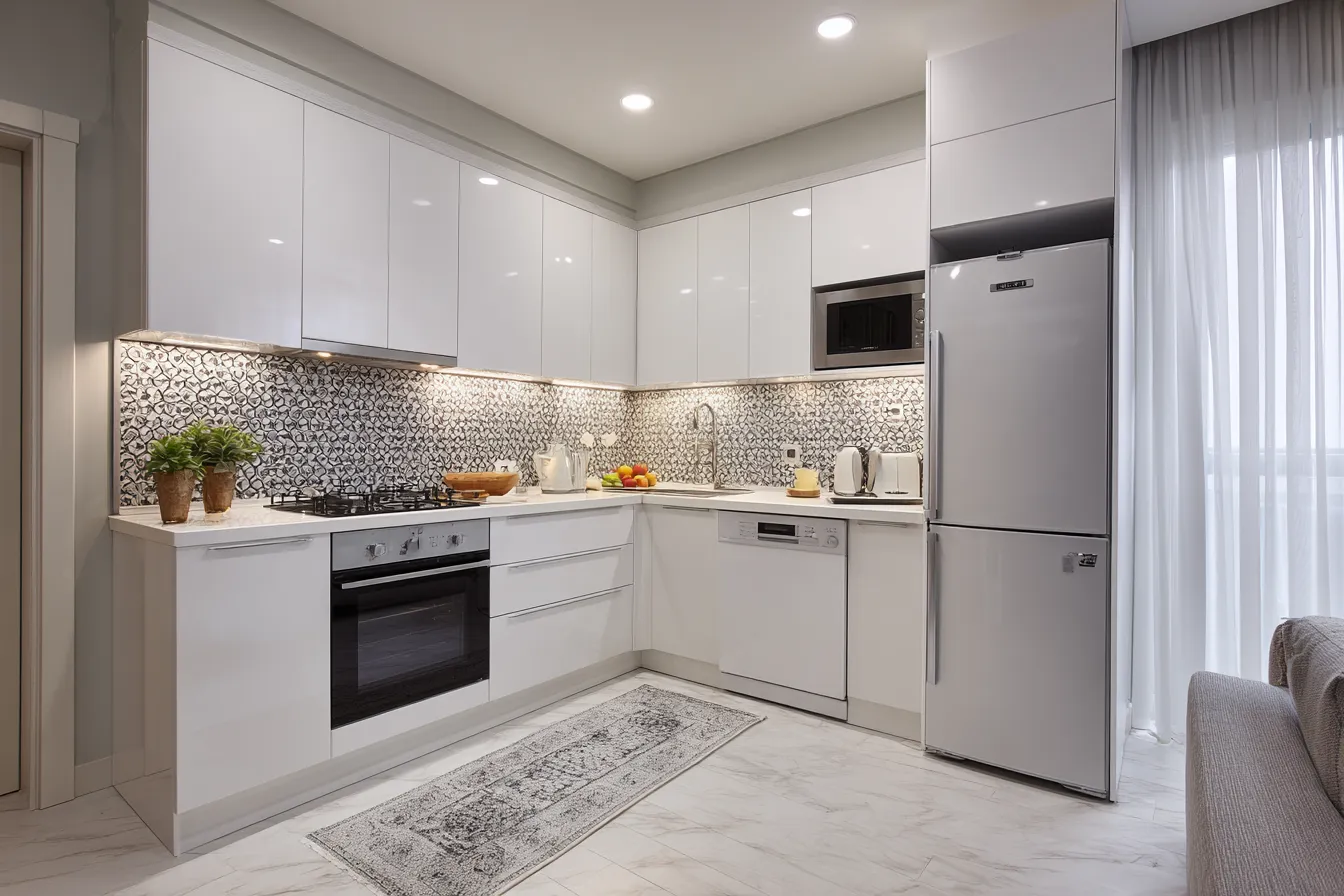
Structural Kitchen Renovation Plans: An Engineering Guide
The physical configuration of a residential kitchen functions as the central nervous system of the modern home. When this configuration requires modification—whether to optimize workflow, accommodate new technology, or simply adapt to changing household needs—the project enters the realm of major structural intervention. Structural Kitchen Renovation Plans. A kitchen renovation is rarely a surface-level cosmetic update; it is an exercise in structural engineering and load path management.
Successful execution of these interventions requires a departure from the “design-first” mentality common in mass-market publications. Instead, the focus must shift to structural integrity and the long-term performance of the building’s envelope. Every wall removed, every floor joist braced, and every utility stack relocated ripples through the home’s overall mechanical and thermal efficiency.
True mastery in residential renovation lies in the ability to anticipate the second-order effects of every spatial decision. Relocating a load-bearing column or expanding a span for an open-plan layout creates new load paths that must be engineered to support the dead and live weights of the house. This pillar article provides a definitive reference for those seeking to understand the mechanical, structural, and procedural requirements for high-level renovations. It serves as an analytical guide, moving beyond the superficial to provide the technical clarity required for professional-grade domestic architecture.
Understanding “structural kitchen renovation plans”
The phrase “structural kitchen renovation plans” is often reduced in popular discourse to a simple set of drawings showing wall placement. In a professional construction and engineering context, however, this terminology encapsulates a comprehensive strategy for managing the safety, stability, and mechanical function of a building. These plans are the roadmap for how the interior space is re-engineered without compromising the integrity of the home’s primary frame. They include load-bearing analyses, seismic bracing specifications, and utility pathing, all of which must be coordinated to ensure that the final result is both functional and legally compliant with local building codes.
The common misunderstanding here is the belief that removing a wall is a straightforward task. In reality, every wall within an older or complex residential structure likely performs a role in gravity load distribution or lateral force resistance. Oversimplification, such as assuming that a “non-bearing” partition is entirely inert, can lead to localized floor sagging, door misalignment, and, in severe cases, structural failure.
The Problem of Superficial Benchmarking
Evaluating the success of a plan based on visual aesthetics is a fundamental error. A design that successfully opens up a kitchen space while failing to account for the necessary point-loading reinforcement is a failure in the most critical sense. True technical mastery is evidenced by the detail within the construction documents—the specified steel headers, the calculated point-load transfers into the foundation, and the precise mechanical venting pathways.
Contextual Intelligence and Localized Building Codes
The most successful projects demonstrate contextual intelligence—the ability to align a project with the specific requirements of the building’s age and regional code. A 1920s balloon-framed house requires a completely different structural approach than a modern, platform-framed build. Planning for these interventions must consider the existing structural settling, the type of foundation, and the current state of the mechanical stacks.
The Evolution of American Domestic Spatial Planning
The history of the American kitchen is a chronicle of shifting domestic workflows. Early twentieth-century homes prioritized small, enclosed rooms that separated the “service” functions from the living space. This layout focused on heat containment and the physical isolation of labor. As heating technology improved and domestic roles shifted in the post-war era, the focus moved toward efficiency and the standardization of appliance positions.
The late twentieth-century movement toward the “open-plan” kitchen fundamentally altered these dynamics. As homeowners demanded greater connectivity, walls were removed, and the kitchen became an integrated social hub. This shift created new, complex structural challenges.
Conceptual Frameworks for Load-Bearing Interventions
Elite practitioners utilize several foundational frameworks to manage the inherent complexity of high-end structural work.
The Load Path Continuity Model
This model requires mapping the transfer of weight from the roof and floor joists down through the walls and eventually to the foundation. Every structural intervention must maintain this continuity. If a vertical path is broken, the plan must define a new, engineered path to move that load safely through the structure to the ground.
The Point-Load Distribution Principle
In an open-plan layout, horizontal beams—or headers—are used to span the new opening. The load from these beams must be transferred to the foundation through vertical columns or “king studs.” This principle ensures that the localized weight is distributed across a large enough surface area to avoid punching through the subfloor or overloading the joists below.
The Mechanical-Structural Synchronization Framework
A structure is not just wood and steel; it is a housing for systems. This model ensures that the structural plan integrates the space required for plumbing stacks, electrical feeders, and HVAC ducting. A common failing is to design the structure first and the mechanicals second, forcing inefficient or intrusive retrofits that compromise the structural integrity.
Taxonomy of Structural Paradigms and Architectural Variations
High-end renovations are rarely uniform. They are defined by the intersection of structural configuration and architectural demand.
| Paradigm | Primary Objective | Engineering Focus |
| Header-Span Modification | Removing wall sections | Load transfer to vertical supports |
| Cantilevered Extension | Extending space beyond the foundation | Moment-frame or beam extension |
| Vertical Stack Relocation | Repurposing mechanical zones | Ensuring structural continuity |
| Balloon-Frame Stabilization | Retrofitting older wall systems | Fire-blocking and load-path reinforcement |
Realistic Decision Logic
The selection of a paradigm should be driven by the existing structural context. A property with a crawlspace requires different load-transfer strategies than one built on a slab or over a basement. Furthermore, the decision to use wood, steel, or engineered lumber as a structural component depends on the length of the span and the specific load requirements.
Real-World Scenarios and Structural Constraints Structural Kitchen Renovation Plans

Scenario 1: The Kitchen-Living Room Merge
A client seeks to remove a load-bearing wall to create a singular, large space. The failure mode is the sagging of the ceiling joists above the new opening. The solution is the installation of a steel or LVL header, supported by newly calculated post-loads that transfer the roof’s weight to the basement’s main girder. The second-order effect is the potential requirement for additional foundation piers to support this concentrated load.
Scenario 2: The Vertical Utility Challenge
An island is planned for a location that previously lacked plumbing or electrical service. The constraint is the floor joist direction. Running the pipes perpendicular to the joists would require extensive cutting, which is structurally hazardous. The architectural solution involves building a “plenum” floor or a soffit-integrated system that allows for the utility routing without weakening the structural members.
Resource Dynamics, Cost Structures, and Investment Logistics
A renovation involving significant structure requires a disciplined allocation of capital. The “cost” of the work is rarely just the materials; it is the labor and the engineering validation that ensure safety.
| Resource Category | Cost Driver | Variability |
| Engineering/Consultation | Complexity of load path | Moderate |
| Steel Fabrication/Setting | Span length and weight | High |
| Subfloor/Foundation Work | Soil bearing capacity | High |
| Mechanical Re-integration | Complexity of utility runs | Moderate |
Professional planners prioritize investments in structural stabilization and moisture management before allocating capital to high-visibility finishes. This approach protects the financial investment by ensuring that the primary asset—the building itself—is secure, durable, and code-compliant.
Tools, Strategies, and Support Systems
The execution of these projects requires a suite of specialized diagnostic and support tools.
-
Digital Laser Surveying: Essential for mapping the exact geometry of the existing home to identify settling or floor-slope deviations.
-
Structural Engineering Peer Review: A necessary step for complex spans to verify the calculations performed by the contractor.
-
Non-Destructive X-Ray Scanning: Used to identify existing framing, wiring, and piping behind walls before demolition begins.
-
Temp-Shoring Assemblies: High-capacity hydraulic or mechanical jacks used to support the house while permanent beams are installed.
The Risk Landscape and Taxonomic Failure Modes
The primary risk in structural renovation is the “hidden condition.” Older homes often contain undocumented structural modifications, moisture-weakened framing, or non-compliant fire-blocking.
-
The Deflection Failure: Installing a span that is technically strong enough to hold the load but not stiff enough to prevent ceiling cracks or door binding.
-
The Load-Path Blindness: Moving a load from one vertical point to another without ensuring the structural members below are capable of supporting the concentration of force.
-
Mechanical Path Erosion: The excessive drilling or cutting of floor joists to accommodate utilities, which compromises the structural strength of the joists to the point of long-term sagging.
Governance, Maintenance, and Long-Term Adaptation
A structural renovation should be treated as a major life-cycle event for the property. Governance is essential.
-
Permit-to-Completion Audit: Ensuring that all work is verified by the local building department through multiple inspection phases.
-
Mechanical Path Inspection: Verifying that the structural modifications have not compromised the home’s fire-blocking or thermal insulation.
-
Record Documentation: The property owner must maintain a complete digital or physical file of the engineering calculations and “as-built” structural drawings for future use.
Establishing these cycles ensures that the home remains a stable, high-performance asset long after the renovation team has departed.
Measurement, Performance Signals, and Analytical Evaluation
Success in these projects is measured by structural stability and the absence of long-term building movement.
-
Leading Indicators: The frequency of change orders related to site conditions, and the robustness of the initial engineering documentation.
-
Lagging Indicators: The absence of new drywall cracks, the smooth operation of doors and windows, and the consistent level of the floors over a multi-year period.
-
Qualitative Signals: The “feel” of the room—the absence of floor bounce or audible structural creaking during normal household use.
Planning should include a post-construction monitoring phase, where the homeowner or property manager reviews the critical joints and spans to ensure they have settled correctly.
Industry Misconceptions and Structural Oversimplifications
-
The “Non-Bearing” Myth: No wall should be assumed “non-bearing” without a formal inspection of the attic and basement conditions.
-
Steel vs. Wood: Steel is not always the best solution for long spans; properly engineered LVLs (Laminated Veneer Lumber) are often easier to install and offer superior fire resistance.
-
The Code as the Goal: Code compliance is the minimum standard for safety; the best structural renovations exceed code to ensure long-term comfort and stiffness.
-
Invisible Engineering is Easy: The most difficult part of structural work is not the beam installation, but the careful, often slow process of transferring the load and managing the utilities.
Strategic Synthesis and Future Pathways
The pursuit of the best renovation plans is an exercise in restraint and engineering precision. It requires the owner and the design team to prioritize the structural integrity of the home above the immediate gratification of aesthetic change. By treating the kitchen renovation as a complex system of structural relationships, property owners can ensure that their investments remain performative, valuable, and relevant for decades.