Compare Kitchen Plumbing Plans: A Professional Engineering Guide
The design of a high-performance residential kitchen involves far more than aesthetic curation. It is an exercise in structural integration, fluid dynamics, and human-machine interface optimization. Within the American residential sector, the kitchen has evolved from a utilitarian service zone into the central nervous system of the home. Compare Kitchen Plumbing Plans. This shift demands that designers and homeowners look past surface finishes to address the mechanical backbone of the space. True mastery in this field requires reconciling the constraints of architectural form with the rigorous demands of domestic labor.
Achieving a high-functioning kitchen requires a deep understanding of spatial geometry and pipe-run logic. Every movement within the workspace must be considered to minimize friction and maximize safety. Architects who specialize in these environments treat the kitchen as a laboratory. They model workflows to ensure that storage, preparation, and cleaning zones operate in concert rather than conflict. This level of technical oversight is what separates a professional design from a standard retail renovation.
When navigating the complexities of a renovation, owners must prioritize professionals who understand the compounding nature of mechanical decisions. A single change in appliance specification often necessitates a cascade of adjustments in water supply pressure, ventilation capacity, and structural reinforcement. The most capable designers do not merely draw plans; they engineer environments that are built to endure decades of intensive use. This article explores the frameworks and critical considerations that define elite culinary plumbing and layout integration in today’s complex housing market.
Understanding “compare kitchen plumbing plans”
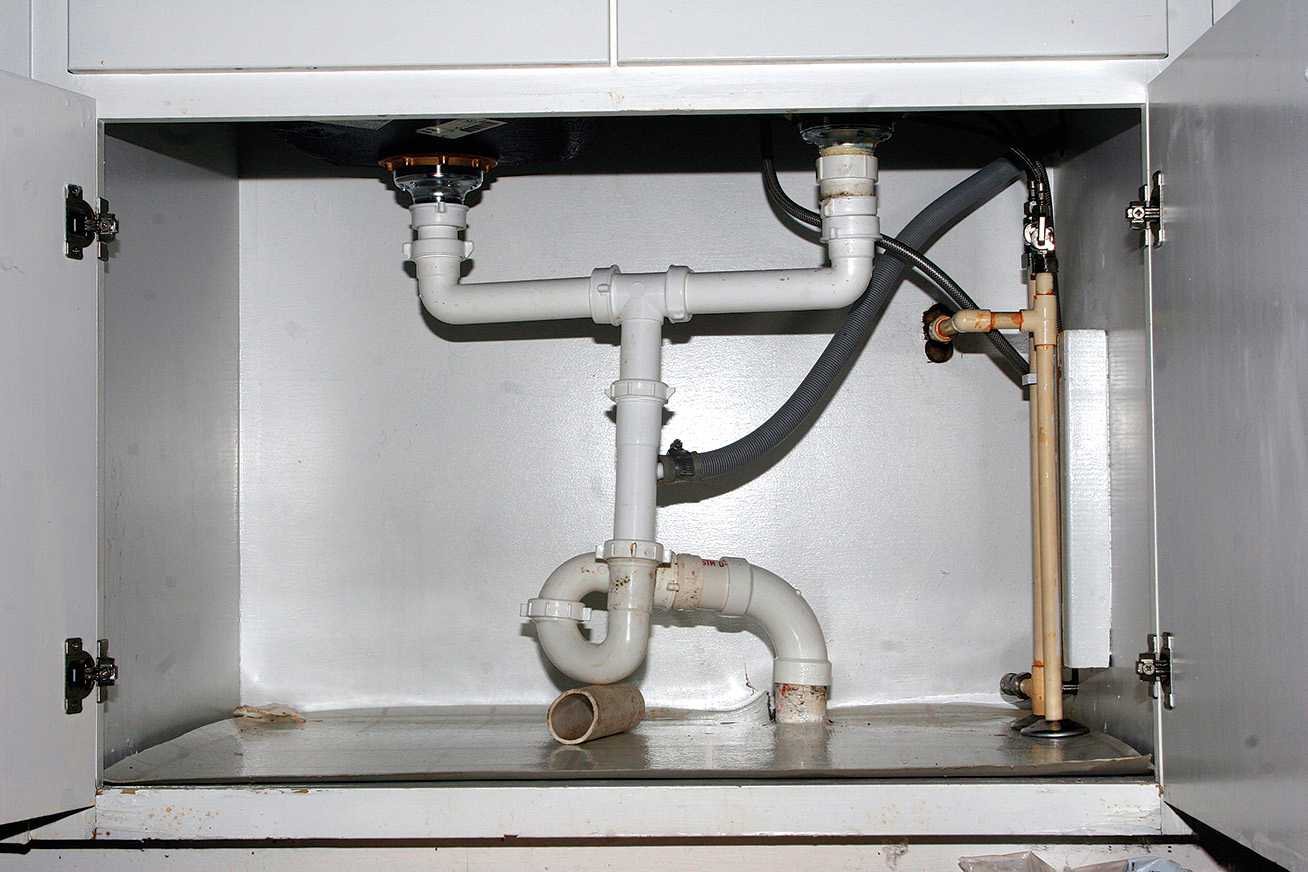
The process to compare kitchen plumbing plans is often hindered by a misunderstanding of what these documents actually represent. Many consumers equate a plumbing plan with a simple schematic of pipe locations. While accurate, this view neglects the systemic nature of the layout. A plumbing plan is, in essence, an integration document. It must harmonize the water supply, the drain-waste-vent (DWV) system, and the physical constraints of the building’s framing. Oversimplification, such as assuming that all layouts are equally efficient or that routing is easily interchangeable, often leads to misaligned expectations and costly field changes.
Distinguishing Architectural Rigor from Surface Styling
There is a significant difference between styling a space and engineering a hydraulic system. A well-considered plan prioritizes structural soundness, utility distribution, and the physics of gravity-fed drainage. These professionals understand that a kitchen is a machine that requires fuel, water, waste management, and thermal control. If these systems are not perfectly synchronized, the aesthetic value of the space will rapidly diminish as maintenance and performance issues arise.
Avoiding the Trap of Superficial Benchmarking
It is common to benchmark plans based on initial installation cost. However, a plan that looks inexpensive on paper may hide massive downstream costs. True mastery is demonstrated in the designer’s ability to navigate complex building codes, optimize limited square footage for future access, and manage the logistics of integrating professional-grade equipment into a residential setting. Identifying an elite plan requires looking beyond the pipe routing to the foundational logic of the system’s longevity and accessibility.
The Historical Evolution of Domestic Plumbing Systems
Early twentieth-century kitchens were compartmentalized service areas. They were often relegated to the back of the home, separated by walls to contain noise and odors. The post-war era brought mass production, leading to the standardized, gravity-driven layouts that define many homes today. These spaces focused on basic efficiency but often sacrificed customization and spatial quality.
The turn of the twenty-first century saw the kitchen integrated into the main living area. This transition changed the architecture of the home. The kitchen became a social center and a site of high-end technological investment. This demand for a public-facing, high-performance workspace necessitated a new type of expertise. Designers now had to address the aesthetic demands of a living room alongside the mechanical demands of a catering-grade facility.
Conceptual Frameworks for Architectural Planning
Elite practitioners in this field rely on established models to ensure that every project meets high performance standards.
The Hydraulic Path Analysis
Water supply lines and drainage pipes do not exist in isolation. This framework evaluates the length of run, the friction loss in pipes, and the required slope for wastewater. A well-designed plan minimizes the distance from the water heater to the sink to reduce wait times for hot water and heat loss.
The Maintenance Access Hierarchy
Architecture is fundamentally about future-proofing. A well-designed plan defines clear access points for shut-off valves and clean-outs. Designers model these access points to ensure that future repairs do not require the destruction of cabinetry or finished floors.
The Mechanical Interdependency Model
This framework treats the kitchen as a series of connected utilities. If the designer moves a sink, they must consider the slope of the drain line, the venting requirements, and the impact on the subfloor structure. Every change is tracked through the system to prevent downstream failures in performance or maintenance.
Taxonomy of Layout Paradigms and System Standards
Designers often focus on specific paradigms. Categorizing these helps owners match their needs with the correct technical approach.
| Paradigm | Primary Focus | Key Engineering Trade-off |
| Traditional Gravity | Direct, sloped drain runs | Requires accessible subfloor space |
| Centralized Utility | Minimizing total pipe length | Limited flexibility in fixture placement |
| Vertical Stack Integration | High-rise building requirements | Extremely rigid routing pathways |
| Decentralized Multi-Zone | Optimizing workflow efficiency | Complex venting and venting requirements |
Realistic Decision Logic
When searching for the best approach, start by identifying the structural context of the project. A historic renovation requires an approach that understands moisture management and structural preservation. A high-rise project requires someone adept at working within the constraints of concrete slabs and vertical utility risers. Selecting the wrong paradigm is the most common reason for cost overruns and design failures.
Real-World Scenarios and Structural Constraints Compare kitchen plumbing plans
Scenario 1: The Historic Timber Framing Conflict
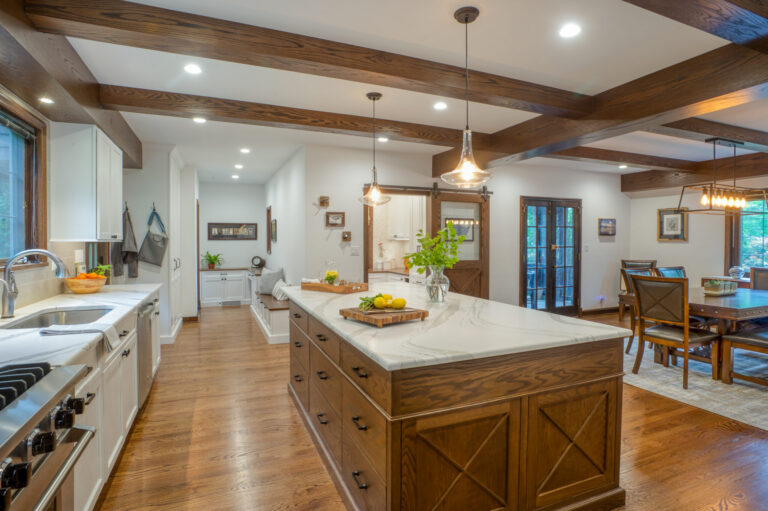
A project involves installing a high-flow, professional-grade sink in a home built on historic, hand-hewn logs. The primary failure mode is joist deflection or damage if the joists are cut to accommodate large drain pipes. An elite designer mitigates this by planning the drain paths to run parallel to the joists or by utilizing specialized, low-profile drainage components.
Scenario 2: The Urban High-Rise Logistics
In a high-rise, moving large waste lines is restricted by concrete slabs. The architectural solution involves precision layout planning. By breaking complex elements into manageable, pre-planned routing paths, the designer ensures that the luxury aesthetic is maintained without needing to compromise the structural integrity of the slab.
Resource Dynamics, Cost Structures, and Investment Logistics
Project costs are often misunderstood as merely the cost of fixtures and piping. In reality, the most successful projects emphasize the cost of integration and long-term performance.
| Resource Category | Cost Driver | Complexity/Risk Level |
| Structural Engineering | Load analysis/Reinforcement | High |
| Mechanical Integration | Venting/Utility routing | High |
| Maintenance Accessibility | Valves/Access panels | Moderate |
| Project Management | Coordination of trades | High |
Investments in structural and mechanical infrastructure yield higher long-term value than investments in decorative fixtures. A well-engineered system remains functional for decades, whereas a poorly planned project will likely require a complete rework of the finishes within a few years.
Diagnostic Tools, Planning Strategies, and Support Systems
The architecture of a kitchen is refined through the use of sophisticated diagnostic tools.
-
Digital Twin Modeling: Creating a virtual model that accounts for every wire, pipe, and beam. This prevents clashing and identifies potential maintenance hurdles before work begins.
-
Laser Alignment Scanners: Using high-precision scanners to document existing site conditions down to the millimeter. This eliminates errors caused by imprecise manual measurements.
-
Gravity Flow Simulations: Modeling the path of waste to ensure that slope requirements are met for every fixture.
-
Thermal Load Calculators: Determining the exact hot water demand of the planned appliance suite to specify the appropriate water heater infrastructure.
The Risk Landscape and Compounding Failure Modes
The greatest risk in high-end culinary design is the separation of design from site reality. This is often described as the “intent-execution gap.” When a designer ignores the specific tolerances of the building—such as the inherent movement of wood framing—the resulting system will fail.
Compounding failure occurs when one system relies on another that hasn’t been properly engineered. For example, a high-capacity dishwasher requires specific venting that must be integrated into the cabinet and drainage plan during the design phase. If this is omitted, the project faces a major delay and a significant rework cost.
Governance, Lifecycle Maintenance, and Long-Term Adaptation
A kitchen is an active mechanical environment that demands a governance strategy.
-
Pre-Construction Structural Review: A third-party evaluation of the design’s impact on the home’s structural stability.
-
Mechanical Validation Protocols: Pressure testing all supply lines and verifying drainage slope rates before closing up the walls.
-
Lifecycle Documentation: The designer should provide a digital “manual” of the kitchen, detailing the location of every utility and the maintenance requirements of every component.
Establishing these cycles ensures that the project remains a high-performance asset throughout its lifecycle.
Measurement, Performance Signals, and Analytical Evaluation
Success in culinary design is measured by function and stability.
-
Leading Indicators: The frequency of change orders during construction and the precision of the initial site documentation.
-
Lagging Indicators: The performance of the system years after construction, measured by the absence of leaks, blockages, or pressure drops.
-
Qualitative Signals: The ease of use reported by the occupants and the maintenance history of the utility systems.
Designers should track these metrics to refine their practice and improve their ability to deliver durable, high-performance environments.
Industry Misconceptions and Structural Oversimplifications
-
The “Visual-Only” Plan Myth: It is often assumed that a pretty layout is a functional one. This ignores the specialized training required for mechanical integration and structural engineering.
-
The “Work Triangle” Fallacy: The modern kitchen has outgrown this simple geometry. Professional planning must account for multi-person workflows and diverse, specialized preparation zones.
-
The Durability Illusion: Price is not a substitute for quality. Many premium fixtures are fragile and unsuitable for the high-impact environment of a professional-grade kitchen.
-
Invisible Utility is Simple: Concealing mechanical systems is a high-level technical challenge. It requires careful planning of access panels and service pathways that must be integrated from day one.
Strategic Synthesis and Future Pathways
The best approach to kitchen design is one that operates at the intersection of engineering and utility. Designers understand that a beautiful kitchen is only as good as the system that supports it. As residential technology continues to advance, the demand for this specialized architectural expertise will only increase.
The future of the field lies in the integration of smart systems, sustainable materials, and precise, data-driven planning. Professionals who embrace these tools will define the next generation of domestic environments. This requires a commitment to lifelong learning, a deep respect for building physics, and a refusal to compromise on the structural integrity of the home.