Best Durable Flooring Options: An Engineering & Performance Guide
The selection of flooring within a residential structure is frequently reduced to a matter of aesthetic preference, yet from an engineering perspective, it represents one of the most critical decisions in home maintenance and asset preservation. A floor is not merely a decorative covering; it is a complex mechanical system that must interface with a home’s structural framing, withstand continuous physical stress, and adapt to the fluctuating thermal and moisture conditions of the interior environment. Best Durable Flooring Options. Choosing the appropriate surface requires an analytical assessment of these forces, moving beyond the surface-level allure of marketing brochures to evaluate the underlying technical performance of materials.
True mastery in residential surface selection requires the ability to interpret long-term performance data through the lens of Life Cycle Cost Analysis (LCCA). A material that appears cost-effective at the point of initial installation may prove to be a financial liability when factoring in the frequency of maintenance, the specialized labor required for repairs, and the inevitable necessity of premature replacement. By prioritizing structural integrity and material durability, homeowners can secure a long-term investment that minimizes the operational friction often associated with lower-grade or improperly specified materials.
This article examines the structural, environmental, and financial frameworks that define superior flooring systems. It moves beyond common, often misleading generalizations to offer a comprehensive reference for those tasked with managing the longevity of their living spaces. By focusing on the mechanics of material performance, this guide provides a foundation for making informed decisions, ensuring that the chosen surface serves as a durable, high-value asset that maintains its functional and aesthetic integrity throughout its intended lifespan.
Understanding “best durable flooring options”
The phrase “best durable flooring options” is often interpreted as a ranking of materials based on a single metric, such as scratch resistance or hardness. In a professional architectural and material science context, however, this terminology is inherently contextual. The “best” option is, therefore, the one that most precisely aligns with the specific environmental and mechanical stressors of its designated application.
Common misunderstandings regarding these options often stem from the conflation of initial resilience with long-term durability. A material may be highly resistant to immediate scratching but prone to irreversible structural degradation when exposed to long-term humidity cycles or foundation shifting. Oversimplification—viewing durability as a static quality rather than a dynamic performance characteristic—is the primary driver of premature flooring failure. True expertise in this domain necessitates a multi-perspective analysis that accounts for the material’s composition, the structural preparation of the subfloor, the method of installation, and the intended maintenance cycle.
The Problem of Contextual Mismatch
Evaluating flooring materials based on universal rankings is fundamentally flawed. A high-density porcelain tile, for example, is virtually indestructible in terms of surface wear, yet it can fail catastrophically if the subfloor below it is not sufficiently rigid to prevent cracking. Conversely, high-quality solid hardwood offers exceptional longevity due to its ability to be refinished multiple times, but it is highly susceptible to environmental damage if the indoor humidity is not strictly managed. Successful specification requires matching the material’s structural limitations to the reality of the room’s environment.
Defining Durability as a Systemic Performance
Durability should be viewed as a systemic performance metric that encompasses the material’s surface, its structural core, and its connection to the building frame. The most robust solutions are those that recognize this interdependence.
The Historical Evolution of Domestic Flooring Systems
The trajectory of residential flooring has moved from the simple, site-finished materials of the pre-industrial era to the highly engineered, multi-layered products common in the modern market. Historically, the use of locally sourced, dense woods or natural stone defined durability, as these materials were selected for their ability to withstand the harsh conditions of daily life in an era of less-controlled environments. The inherent value in these historic floors was their capacity for ongoing maintenance; they were intended to be polished, scrubbed, and even sanded back to their original state over many decades.
The mid-20th century introduced a focus on efficiency and hygiene, leading to the proliferation of resilient materials like linoleum and, later, various forms of plastic-based polymers. While these materials offered immediate benefits in ease of cleaning and initial cost, they often traded long-term structural longevity for immediate convenience. Modern engineering has attempted to bridge this gap, utilizing high-density fiberboard (HDF) cores, UV-cured wear layers, and advanced interlocking systems to create products that simulate the appearance of natural materials while providing the resilience of engineered polymers. Understanding this evolution is essential for assessing the performance limits of current market offerings.
Conceptual Frameworks for Material Longevity
To evaluate the longevity of residential surfaces effectively, practitioners utilize established mental models that prioritize performance over convenience.
The Environmental Stress-Response Framework
This model maps the material’s performance against specific environmental variables: temperature, relative humidity, UV exposure, and moisture ingress. Every material has a specific “envelope” within which it performs optimally. The most durable materials are those whose performance envelopes overlap most significantly with the actual conditions of the installation site.
The Impact-Friction-Abrasion Matrix
This framework categorizes physical stressors based on their mechanical mechanism. Friction and abrasion from tracked-in grit are the primary causes of surface dulling, while impact from heavy objects is the primary cause of indentation and cracking. Specifying a material requires an honest assessment of which stressor is most prevalent in the space and selecting a material optimized to resist that specific mechanism.
The Life Cycle Economic Model
This model shifts the focus from initial installation cost to the total cost of ownership, including cleaning schedules, chemical treatment, and the time-interval to failure. By applying a discount rate to future maintenance and replacement costs, this model reveals the true financial investment required to maintain a floor over a 40- to 75-year study period.
Taxonomy of Flooring Paradigms and Performance Standards
The classification of flooring materials must move beyond simple nomenclature to reflect their structural and mechanical paradigms.
| Paradigm | Primary Construction Focus | Structural Trade-off |
| Monolithic Inorganic | Stone, Ceramic, Porcelain | Requires extreme subfloor rigidity |
| Engineered Laminated | Polymer-based/Composite Core | Susceptible to UV/Chemical degradation |
| Organic Solid | Solid Hardwood, Bamboo | Highly dependent on moisture control |
| Resilient Flexible | Sheet Vinyl, Linoleum | Limited repairability (replacement only) |
Realistic Decision Logic
The selection of a paradigm is dictated by the existing structural context. A concrete slab on grade, while inherently rigid, often harbors hidden moisture that can compromise organic materials. A wood-framed subfloor, while more flexible, requires the use of materials that can accommodate natural seasonal movement. The “best” option is the one that minimizes the potential for system-wide failure by matching the material’s physical properties to the constraints of the building’s structure and the expected intensity of use.
Real-World Scenarios and Structural Constraints Best Durable Flooring Options
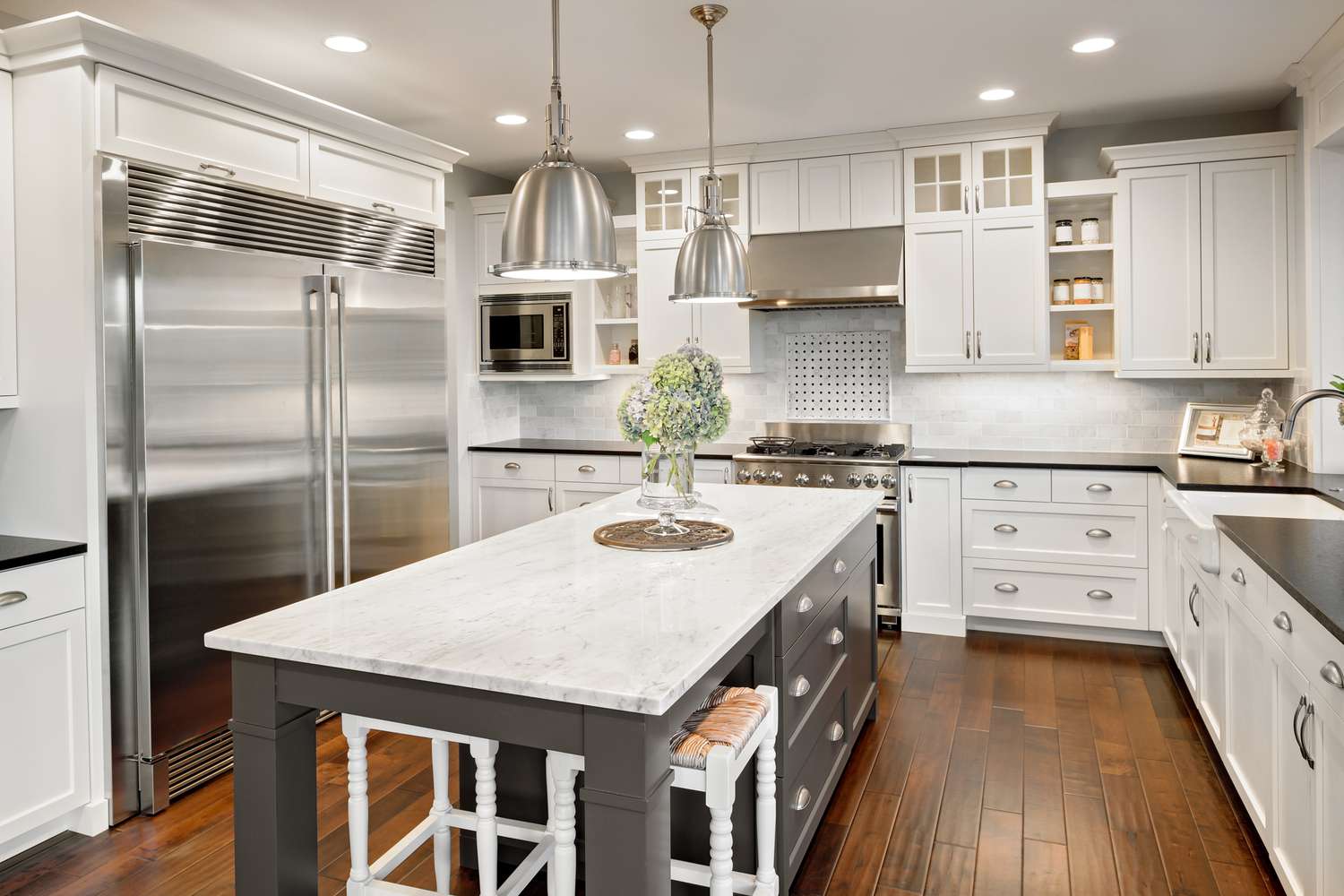
Scenario 1: The Kitchen Moisture Conflict
A client intends to install wide-plank, organic-core wood flooring in a kitchen adjacent to an exterior entrance. The primary failure mode is the cumulative effect of moisture ingress from both subfloor humidity and surface spills. The technical decision point is the selection of a high-performance, moisture-cured urethane finish and a robust vapor barrier underlayment.
Scenario 2: The Urban High-Traffic Entryway
In a city home, the entryway experiences extreme abrasion from tracked-in sand, salt, and water. A softer surface will degrade in months. The architectural decision focuses on a monolithic inorganic solution, such as flame-treated porcelain, which provides extreme hardness and zero porosity. The trade-off is the need for a decoupling mat underlayment to prevent the brittle surface from cracking as the building settles and vibrates.
Planning, Resource Dynamics, and Financial Logistics
The financial commitment of flooring extends significantly beyond the initial acquisition price.
| Resource Category | Cost Driver | Variability |
| Material Quality | Density/Wear Layer Thickness | Moderate |
| Subfloor Preparation | Leveling/Structural Reinforcement | High |
| Specialized Installation | Labor for High-Precision Materials | High |
| Preventative Maintenance | Chemicals/Surface Coatings | Low |
Effective projects utilize a multi-phase financial strategy, prioritizing subfloor preparation and structural stabilization before allocating capital to high-visibility finishes. This approach protects the financial investment by ensuring that the primary surface—which is a permanent structural element—is secured against the environmental and mechanical pressures that lead to premature failure.
Diagnostic Tools, Installation Strategies, and Support Systems
The successful specification and installation of residential flooring rely on the use of specialized diagnostic methodologies.
-
Non-Destructive Moisture Mapping: Using high-frequency impedance sensors to identify hidden moisture levels in concrete slabs, preventing adhesive failure.
-
Structural Deflection Analysis: Assessing the subfloor’s rigidity through laser-leveling to ensure it meets the tolerances required for large-format tile or stone.
-
Environmental Data Logging: Tracking the home’s interior temperature and humidity over a 14-day acclimation period to verify that the environment is stable for material installation.
-
Wear-Layer Performance Testing: Utilizing standardized abrasive-wear tests (such as the Taber test) to verify the actual durability of the manufacturer’s provided finish.
The Risk Landscape and Taxonomic Failure Modes
Flooring projects face compounding risks, often stemming from the misapplication of modern materials to unstable substrates.
-
The Vapor Trap Failure: Applying a high-permeance surface covering (like LVP) over a concrete slab without proper vapor mitigation leads to mold growth and adhesive degradation.
-
Structural Deflection Failure: Installing brittle, monolithic materials over a floor system that does not meet the necessary stiffness (L/360 or L/720) standards leads to immediate cracking.
-
Inappropriate Acclimation: The failure to allow materials to reach equilibrium with the local interior environment leads to uncontrollable expansion or contraction, causing gaps or buckling.
Project Governance, Maintenance, and Long-Term Adaptation
A flooring system requires an ongoing cycle of governance to remain an effective asset.
-
Seasonal Review Cycles: Monitoring the flooring’s performance through extreme humidity shifts to detect signs of early structural stress.
-
Material-Specific Maintenance: Implementing protocols tailored to the specific chemical composition of the floor, avoiding generic cleaners that can damage UV-cured finishes.
-
Adjustment Triggers: Establishing clear thresholds for intervention—such as specific gap widths or surface finish degradation—that necessitate immediate consultation with a qualified floor technologist.
A layered checklist should be provided to every homeowner, outlining the operational requirements of their unique flooring system.
Measurement, Performance Signals, and Analytical Evaluation
Measuring the success of a flooring specification requires both quantitative and qualitative data.
-
Wear Performance Logs: Tracking the frequency and type of surface blemishes, which provides a signal as to whether the specified wear layer is appropriate for the traffic level.
-
Mechanical Stability Monitoring: Using calibrated digital sensors to track any movement in the subfloor or joints following initial installation.
-
Archival Documentation Examples:
-
A detailed report of the subfloor preparation and leveling results.
-
A record of the environmental conditions (temperature/humidity) at the time of installation.
-
An ongoing log of all cleaning and maintenance activities performed since the project completion.
-
Industry Misconceptions and Structural Oversimplifications
-
The “Waterproof” Fallacy: A surface being “waterproof” does not mean the entire flooring system is immune to water; moisture trapped beneath a “waterproof” surface can still lead to systemic structural failure.
-
Hardness Equals Durability: A material can be extremely hard and yet brittle, failing upon impact, whereas a slightly softer, more elastic material may survive the same impact without damage.
-
The Maintenance-Free Myth: No flooring material is truly maintenance-free; all require disciplined care to preserve the wear layer and structural integrity over a 20+ year horizon.
-
Cost as a Proxy for Quality: High price points are often linked to fashion, branding, and distribution, whereas high functional performance is often driven by material density and engineering precision.
Strategic Synthesis and Future Pathways
The identification of the best durable flooring options is ultimately an exercise in disciplined engineering and contextual awareness. As the residential sector continues to prioritize long-term asset value, the role of the flooring professional will shift toward that of a performance specialist, capable of managing the complex intersection of building science, material physics, and human usage patterns. Future success in this field depends on a commitment to data-driven specification, a rigorous approach to installation governance, and a refusal to compromise on the structural integrity of the home. By maintaining this discipline, we ensure that the floor—the foundational surface of the domestic space—continues to serve as a reliable, high-performance asset that maintains its functional and aesthetic integrity for decades.