Best Kitchen Island for Open Concept: An Engineering & Design Guide
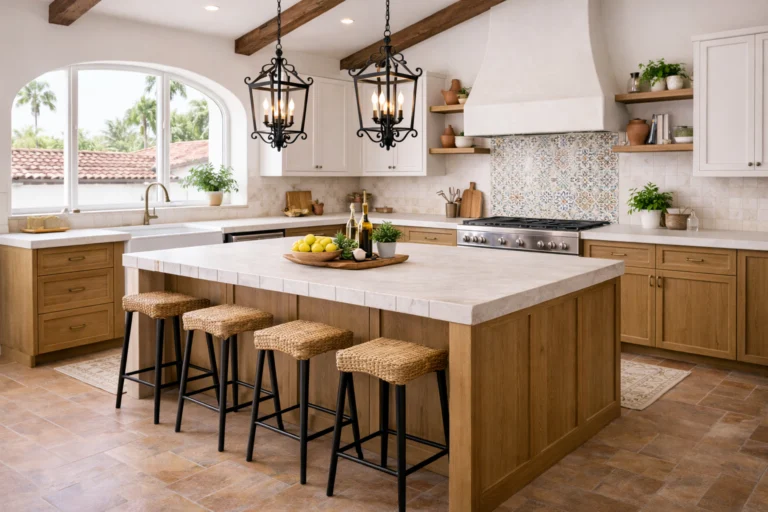
The kitchen island has evolved from a secondary preparation surface into the primary anchoring element of the open-plan interior. This transformation marks a fundamental shift in how domestic environments are engineered for social interaction, culinary production, and flexible living. An island in an open-concept layout operates as a critical transition zone. Best Kitchen Island for Open Concept. It sits between the high-intensity service area and the passive social spheres. Its design must address a core paradox. It must function as a robust workhorse for rigorous daily labor while acting as a refined piece of furniture.
Achieving successful integration requires a sophisticated understanding of spatial geometry, traffic-pattern flow, and the systemic requirements of utility delivery. The island is not merely a static object placed into a room. It functions as an intersection of mechanical systems—plumbing, electrical, ventilation, and data—that must be reconciled with the building’s structural foundation. When conceived poorly, the island becomes a bottleneck. It obstructs movement and fragments the cohesion of an open space. When executed with precision, it serves as the unifying element that allows disparate functional zones to operate as a singular, fluid system.
The following analysis moves beyond the visual curation often associated with kitchen design. It provides a technical exploration of the island as an architectural component. By examining structural constraints, ergonomic requirements, and the long-term viability of these units, this article establishes a framework for evaluating and selecting the appropriate intervention. The focus remains on durability, performance, and the systemic alignment of the kitchen with the total home environment. This ensures that the chosen solution serves as a resilient, multi-generational asset within the modern dwelling.
Understanding “best kitchen island for open concept”
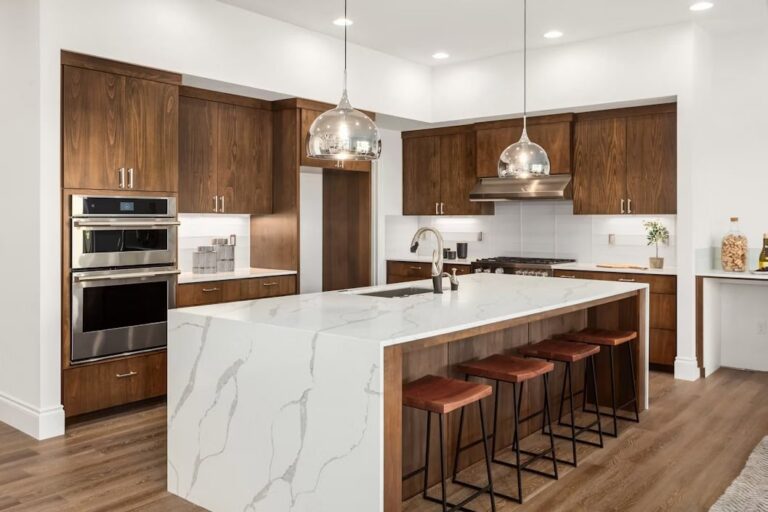
Defining the “best kitchen island for open concept” requires moving away from the assumption that there is a universal model or size suitable for every floor plan. In a professional architectural context, the “best” island is defined by its ability to resolve specific spatial and mechanical challenges within its environment. Common misunderstandings often center on the belief that larger is inherently better. In reality, an oversized island can overwhelm a space. It creates “dead zones” where movement is forced into inefficient, circuitous paths. The risk of oversimplification is substantial. Prioritizing a singular aesthetic feature, such as a waterfall countertop, often comes at the expense of necessary work-clearance zones or adequate mechanical access.
A multi-perspective evaluation recognizes the island as a complex interface. It establishes the division between service and leisure. Understanding the “best” solution necessitates a deep audit of these competing requirements. This allows for the identification of the exact equilibrium point where performance, aesthetics, and structural feasibility converge.
The Problem of Superficial Benchmarking
Evaluating an island design based on digital renders or static photography ignores the primary indicator of success: circulation. The functionality of an open-concept home is defined by the efficiency of the “work triangles” and the clarity of the primary transit paths. An island that restricts these paths creates immediate operational friction. This occurs when it forces the cook to navigate around obstacles between the primary range and the sink. The most effective islands support the inhabitant’s natural movement patterns. They act as facilitators of productivity rather than visual centerpieces that dictate a compromised layout.
Contextual Intelligence and Systemic Balance
Elite design practices demonstrate contextual intelligence by acknowledging that the island is part of a larger architectural machine. If the island includes a sink, it necessitates a complex integration of drainage and supply lines. These must be accommodated within the subfloor without compromising the structural joists. If it includes a cooking surface, it demands high-capacity ventilation. Poor planning here can dominate the visual field and negate the sense of openness that the layout was intended to provide. The “best” solution balances these technical requirements with the aesthetic aspirations of the home. It ensures that the island reinforces the openness of the space rather than obstructing it.
The Evolution of the Centralized Domestic Hub
The history of the kitchen island tracks the trajectory of American domestic life from segregated service to integrated communal experience. In the early 20th century, the “kitchen table” served as the informal center of activity. The actual food preparation was confined to a separate, often cramped, work area. As mid-century domestic patterns shifted toward more informal, family-oriented structures, the concept of the kitchen began to expand.
From Service Zone to Social Anchor
The island emerged as a solution for consolidating prep work into the center of the kitchen. It allowed for the visibility of the cook during the social hosting process. This functional shift was supported by the standardization of cabinet sizes and the refinement of surface materials.
The subsequent move toward full open-concept living necessitated the evolution of the island into a multifunctional architectural pillar. Kitchens, dining rooms, and living rooms are now blurred into a singular, flowing volume. The island now functions simultaneously as a primary workspace, a secondary dining surface, and a central storage unit. This evolution has transformed the island into the most mechanically complex element in the contemporary American home. The demand for islands that can perform these varied roles has created a market for custom-engineered solutions. Technical precision is required to support the diverse requirements of the modern, high-functioning household.
Conceptual Frameworks for Spatial Integration
To effectively specify an island, designers and homeowners must apply mental models that prioritize structural and functional performance.
The Circulation Efficiency Model
This framework requires mapping all primary and secondary transit paths around the island. The model dictates that there must be a minimum of 42 inches of clearance between the island and any opposing counters. 48 inches is preferred for multi-user workflows. By treating circulation as a non-negotiable constraint, this model prevents the common error of overcrowding the space. It ensures that the island functions as a facilitator of movement rather than a barrier.
The Utility Integration Hierarchy
This model classifies every island component based on its mechanical needs. These include heavy-load (sinks, appliances), moderate-load (outlets, charging ports), and zero-load (storage, seating). The hierarchy dictates the island’s structural and logistical requirements. A heavy-load island is essentially a building-integrated system. A zero-load island is effectively a large piece of furniture. Understanding this distinction is vital for determining the level of structural and mechanical prep work required before the island can be installed.
The Anthropometric Scale Analysis
This framework uses the dimensions of the inhabitants to define the optimal height, depth, and overhang dimensions. It moves beyond standard-size assumptions. It acknowledges that the island should fit the user’s specific ergonomic profile. For example, a prep island may be lowered to reduce fatigue. A social island might incorporate varying heights to create a more dynamic and inviting space for seated guests.
Taxonomy of Island Configurations and Performance Paradigms
Islands can be categorized by their functional focus and their impact on the surrounding spatial volume.
| Configuration Category | Operational Focus | Structural Trade-off |
| Monolithic Workspace | Intense prep and cleaning | Requires heavy-duty subfloor prep |
| Social Transition Hub | Seating and integrated storage | Demands deep clearance for ergonomics |
| Mechanical Integration Center | Appliance and utility concentration | Complex mechanical and thermal venting |
| Mobile Atelier | Modular and flexible utility | Limited storage capacity/utility reach |
Realistic Decision Logic
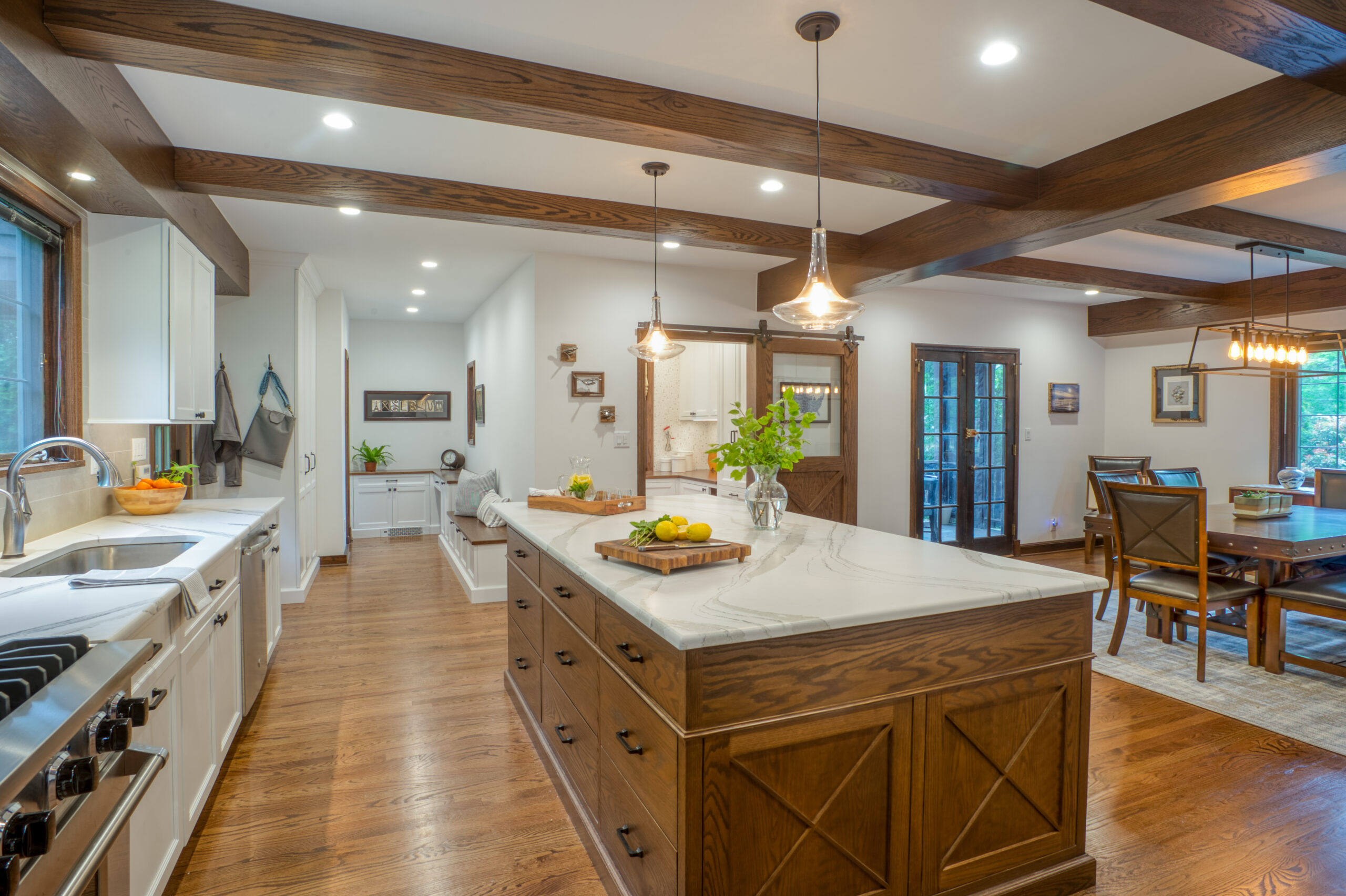
The selection of a configuration is dictated by the building’s existing layout and the primary use case of the kitchen. If the open-concept home is small, a mobile or secondary-scale island may provide the necessary prep space without sacrificing the fluidity of the floor plan. In large, estate-scale renovations, a dual-island configuration—one for service, one for social interaction—is often the most effective way to manage the dual demands of high-performance cooking and casual communal gathering. The goal is to match the island’s mass and utility to the scale of the room. This prevents a disconnect between the kitchen’s function and the home’s architecture.
Real-World Scenarios and Structural Constraints Best Kitchen Island for Open Concept

Scenario 1: The Subfloor Load Crisis
A homeowner aims for a large stone-topped island with an integrated sink and dishwasher. The existing house is a modern construction with engineered floor joists. The failure mode involves localized joist deflection under the immense dead weight of the island. This leads to stress cracks in the flooring. The mitigation is a dedicated structural pier or upgraded floor framing beneath the island’s footprint, installed during the early construction phase.
Scenario 2: The Ventilation Dilemma
In an open-concept space, a large cooktop on the island creates a massive ventilation hurdle. Installing a high-performance hood can visually partition the room, defeating the purpose of the open concept. The structural solution is either a downdraft system, which requires significant floor-void space for ductwork, or a ceiling-recessed extraction system. Each option involves a significant trade-off in performance versus aesthetic impact.
Capital Allocation, Logistics, and Resource Dynamics
The economic reality of high-end kitchen islands requires a sophisticated strategy that accounts for more than just the cabinetry and countertop costs.
| Resource Category | Cost Driver | Complexity Index |
| Structural/Floor Reinforcement | Site-specific load capacity | High |
| Mechanical/Utility Routing | Plumbing/Electrical/Venting | High |
| Custom Millwork/Cabinetry | Material and detail quality | Moderate |
| Surface/Countertop Slab | Material rarity and fabrication | Moderate |
Investment should follow the utility: prioritize the structural prep and mechanical integration. These are the “invisible” elements that provide the island’s durability and performance. A reduction in countertop quality to accommodate a robust subfloor reinforcement is almost always a superior long-term strategy for maintaining the asset’s value and utility.
Diagnostic Tools, Planning Strategies, and Professional Support
The successful specification of an island relies on a range of analytical tools.
-
Digital Floor-Slab Surveying: Confirming floor levelness ensures that the island base can be installed with precise, tight reveals.
-
Flow Simulation Modeling: Using basic physical templates to mock-up the island’s footprint allows for a realistic test of the proposed circulation paths before finalizing the design.
-
Mechanical Path Verification: Using specialized scanning tools to trace the path of all utilities from the source to the island ensures no conflicts with existing framing.
-
Component-Level Load Audits: Calculating the weight of every drawer, appliance, and countertop section specifies the required structural support precisely.
The Risk Landscape and Compounding Failure Modes
The failure of an island is rarely a sudden event; it is the accumulation of systemic oversights.
-
Differential Settlement: Occurs when the island is anchored differently than the surrounding structure. This leads to unsightly gaps or cracks where the island meets the floor.
-
The “Moisture-Trap” Failure: Common in sink-integrated islands where lack of ventilation inside the cabinet cavity causes mold growth and material swelling over time.
-
Structural Fatigue: The cumulative effect of improper subfloor support leads to the eventual sagging of the entire island unit.
Project Governance, Lifecycle Maintenance, and Adaptation
A high-functioning island is a mechanical asset that requires formal management.
Establishing Maintenance Protocols
-
Periodic Structural Inspection: Checking the leveling and anchor points every 24 months accounts for normal building settling.
-
Mechanical Validation: Inspecting drainage and supply connections for signs of micro-leaks prevents long-term structural decay.
-
Adjustment Triggers: Establishing clear thresholds for mechanical function, such as when drawer slides or hinges require re-alignment to maintain the precision of the unit’s gaps.
A layered maintenance checklist should be provided to the property owner. This ensures that the island’s performance is monitored and preserved over the long term.
Measurement, Performance Signals, and Analytical Evaluation
Success in an open-concept island design is measured by the fluidity of the living space.
-
Leading Indicators: The ease of interaction during multi-user cooking events and the absence of circulation bottlenecks during social gatherings.
-
Lagging Indicators: The long-term stability of the finish and hardware, and the total lack of service-related repairs to the utility connections.
-
Qualitative Signals: The subjective sense of openness and flow, and the degree to which the island successfully draws the eye and encourages interaction without dominating the physical space.
Documentation should include the structural load calculations, the utility routing map, and a detailed schedule of the island’s components for future maintenance needs.
Industry Misconceptions and Structural Oversimplifications
-
The “Waterfall” Aesthetic: While popular, the waterfall edge is a fragile structural detail prone to chipping. It requires a higher degree of protective maintenance than traditional edge details.
-
Seating Capacity Overload: Designing for seating that exceeds the kitchen’s comfortable capacity creates a cluttered, unusable zone.
-
Appliance Over-Integration: Attempting to put every appliance in the island often results in a chaotic, inefficient mess of power cords and noise.
-
“Open Concept” as an Excuse for Lack of Storage: Islands are not a substitute for the proper organizational planning of the primary kitchen cabinetry.
Strategic Synthesis and Future Pathways
Selecting the best kitchen island for open concept is fundamentally a balancing act between structural rigor, mechanical efficiency, and ergonomic clarity. By prioritizing the structural and utility-based requirements of the island, homeowners create a foundational asset that supports the evolving needs of their lives. The future of the domestic hub lies in the integration of even more sophisticated, concealed utility systems and the use of materials that combine extreme performance with aesthetic refinement. Those who approach the island as a complex architectural problem rather than an aesthetic accessory achieve the highest degree of long-term utility. This ensures their homes remain high-performance environments for generations.