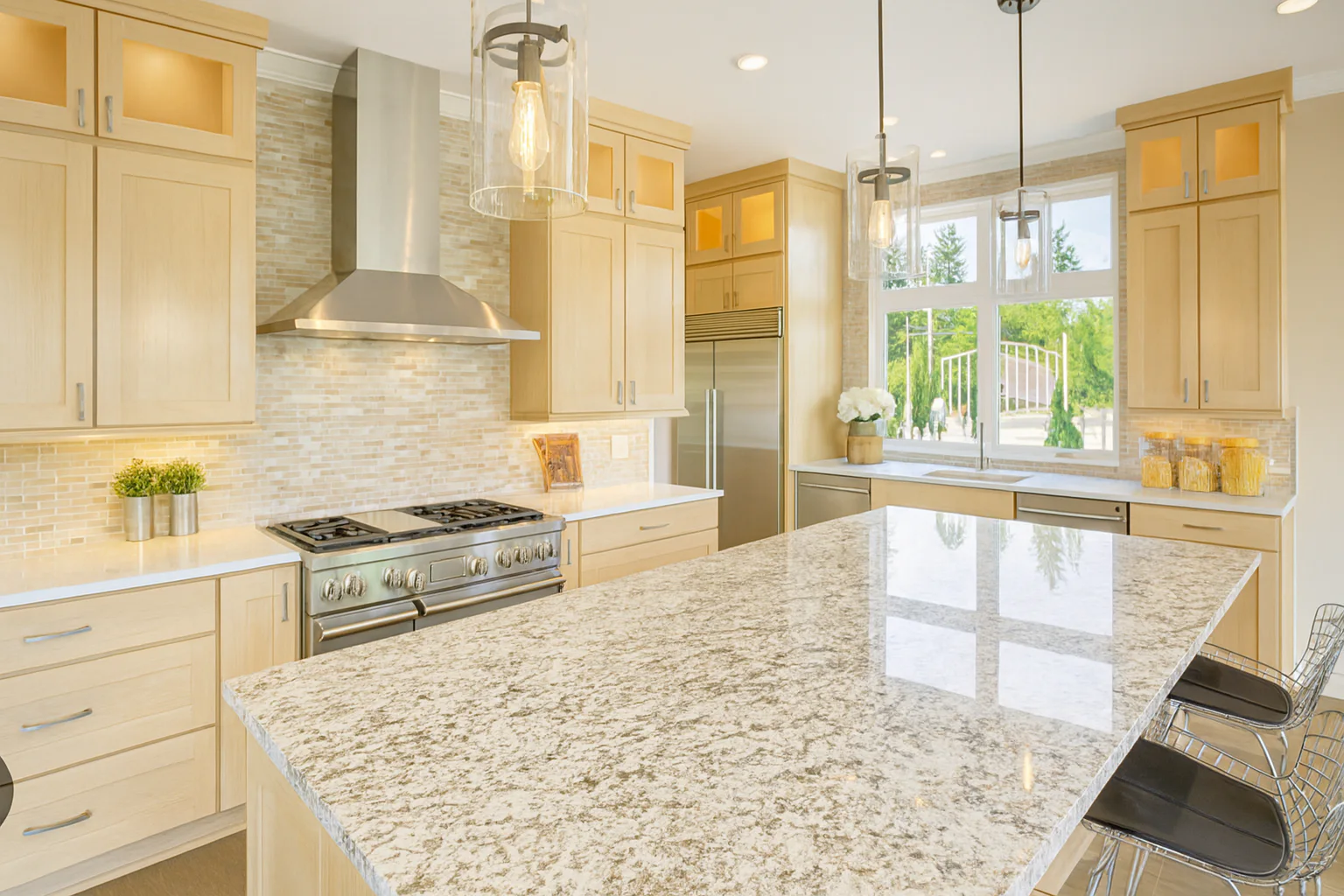
Common Kitchen Countertop Mistakes: A Technical Maintenance Guide
The kitchen countertop serves as the most demanding intersection of domestic utility and design intent. It functions as the primary platform for high-intensity food preparation, chemical exposure, thermal fluctuations, and mechanical load. When viewed merely as an aesthetic finish, the countertop becomes a site of frequent failure. Common Kitchen Countertop Mistakes. True mastery of kitchen design necessitates recognizing this surface as a critical engineering component—one that must withstand the physical rigors of daily use while maintaining its chemical and structural stability.
Many failures in residential kitchen design originate from a disconnect between a material’s inherent properties and the functional demands of the household. Designers often specify surfaces based on the visual “story” they provide in a showroom, neglecting the reality of porosity, heat sensitivity, and impact resistance. This misalignment often leads to significant economic and emotional costs, as the rectification of a failed countertop usually requires a total demolition of the existing sink, backsplash, and base cabinetry infrastructure.
This analysis provides a rigorous, technical examination of the horizontal surface as an architectural element. It moves beyond superficial maintenance advice to explore the engineering principles, material science, and systemic governance required to prevent premature degradation. By framing the countertop as a foundational asset, the following sections establish a methodology for evaluating, selecting, and maintaining these surfaces, ensuring that homeowners can avoid the systemic errors that compromise long-term value.
Understanding “common kitchen countertop mistakes”
Defining “common kitchen countertop mistakes” requires a shift away from the view that these errors are limited to “spills” or “lack of care.” In a professional architectural context, a failure is defined by the inability of the chosen surface to withstand the intended use-case of the household over an extended duration. Common misunderstandings often center on the belief that “natural stone” or “engineered quartz” implies immunity to all damage. Oversimplification—such as neglecting the impact of UV exposure on resin-bound composites or failing to account for the porosity of certain metamorphic rocks—frequently leads to permanent staining, etching, or structural fracture.
A multi-perspective evaluation recognizes the countertop as an integrated interface between the structure and the occupant. From the mechanical perspective, it involves the reconciliation of weight, substrate rigidity, and seam integrity. Understanding how to navigate these challenges requires a deep audit of the interplay between these competing requirements. The optimal surface is an equilibrium where performance, structural integrity, and serviceability converge.
The Problem of Superficial Benchmarking
Evaluating a countertop based solely on visual aesthetics or showroom samples ignores the primary indicator of success: serviceability under stress. An installation that appears flawless upon completion but utilizes a material incompatible with the owner’s lifestyle—such as a porous marble in a high-traffic, acid-heavy kitchen—will inevitably degrade. The most effective surfaces support natural kitchen rhythms. They act as facilitators of productivity rather than delicate objects that require constant, exhausting oversight to remain intact.
Systemic Balance and Material Compatibility
Professional practices demonstrate systemic intelligence by acknowledging the chemical and thermal interactions of the surface. If an installation involves heavy-duty cooktops, it requires specific heat-mitigation strategies. If it involves significant food preparation, it requires a non-porous seal. Poor planning here, particularly in the hidden spaces behind the backsplash or at the sink edge, can result in hidden moisture intrusion that leads to cabinetry rot. The best way to avoid such outcomes is a proactive, materials-first approach that ensures the entire surface acts as a chemically and mechanically compatible barrier.
The Evolution of Countertop Engineering and Material Science
The history of the kitchen countertop tracks the trajectory of domestic engineering from the simple wood-plank basin to the high-performance synthetic slab. In the mid-20th century, the kitchen surface was typically a localized utility, often constructed from laminate or stainless steel. As the demand for increased aesthetic variety and durability grew, the complexity of the material market expanded rapidly. The introduction of engineered quartz, sintered stone, and updated natural stone sealants transformed the countertop into a multi-load environment.
From Localized Utility to Multi-Load Platform
This transition necessitated the evolution of countertops from simple wood-based laminates to integrated, high-capacity stone and composite platforms. Contemporary kitchens now handle a higher volume of heat, a more diverse range of cleaning chemicals, and a wider variety of physical impacts—from dropped heavy cookware to abrasive knife contact. This increase in load-intensity has made the surface far more susceptible to failure if the selection does not account for modern volume requirements. Understanding this evolution explains why older homes, when remodeled, frequently suffer from countertop failures if new surfaces are installed without upgrading the underlying cabinet-base structural support.
Conceptual Frameworks for Horizontal Surface Performance
To effectively specify and install countertops, designers and installers must apply mental models that prioritize mechanical and chemical performance.
The Porosity-Resistance Model
This framework requires mapping the inherent density and surface absorption of a material against the expected chemical environment of the kitchen. The model dictates that any material with a porosity index exceeding a specific threshold must be treated with a high-performance, long-duration sealant. By treating chemical resistance as a non-negotiable constraint, this model prevents the common error of “hidden staining,” ensuring the surface remains hygienic and clean.
The Thermal Cycling Framework
This model focuses on the reality that surfaces in a kitchen are constantly exposed to rapid temperature shifts. If a material’s coefficient of expansion differs significantly from the substrate or the neighboring materials, the resulting stress will lead to hairline fractures, particularly at high-heat zones like the cooktop edge. The framework requires verifying that the chosen stone or composite has the thermal stability to absorb these gradients without structural compromise.
The Structural Support Logic
This model accounts for the dead weight of dense stone surfaces and the necessity of rigid substrate support. The framework mandates that large spans of countertop are never cantilevered without specialized steel reinforcement. Neglecting the structural support in a modern, heavy-stone kitchen will lead to the “ticking” sounds in cabinetry or, in more severe cases, the snapping of the stone along natural cleavage planes.
Taxonomy of Material Variations and Operational Trade-offs
Countertop materials can be categorized by their capacity for load and their ease of future maintenance.
| Material Category | Operational Focus | Structural Trade-off |
| Metamorphic Stone | High heat/aesthetic value | High porosity/acid sensitivity |
| Engineered Quartz | Low porosity/uniformity | Low heat resistance/UV stability |
| Sintered Stone/Ceramic | Extreme hardness/heat resistance | Brittleness/impact damage risk |
| Solid Surface Composite | Repairability/seamless integration | Low scratch resistance |
Realistic Decision Logic
The selection of a material is dictated by the specific usage patterns of the household and the structural limitations of the cabinetry assembly. If the kitchen is part of a high-utility, high-volume environment, the ability to tolerate heat and impact takes precedence over exotic veining. In large-scale renovations, the goal should always be to simplify the geometry of the countertop runs to reduce the number of potential failure points, specifically seams. A surface with fewer seams is, by definition, more reliable and easier to maintain.
Real-World Scenarios and Structural Interdependencies Common Kitchen Countertop Mistakes
Scenario 1: The Seam Failure
A designer specifies an exotic granite with complex veining and forces the fabricator to place a seam across a narrow, high-stress sink bridge. The failure mode is the eventual cracking of the stone due to the lack of structural material width. The mitigation is a design-phase requirement that ensures seams are positioned at the largest, most supported portions of the layout or that additional mechanical reinforcement is integrated.
Scenario 2: The Heat-Fracture Disconnect
A homeowner places a high-output induction cooktop directly onto an engineered quartz surface without leaving the recommended thermal expansion gap. During prolonged high-heat operation, the quartz fractures at the corners of the cutout. The second-order effect is a costly full-countertop replacement. The structural solution is to adhere strictly to the manufacturer’s thermal clearance protocols, demonstrating that visual “tightness” cannot override physical material requirements.
Resource Dynamics, Cost Structures, and Lifecycle Value
The economic reality of high-performance countertops involves prioritizing the “invisible” structural and sealing needs over the visible aesthetic grade.
| Resource Category | Cost Driver | Complexity Index |
| Material/Slab Grade | Rareness/Veining complexity | Moderate |
| Fabrication/Edge Detail | Custom profiling/seam matching | High |
| Structural Reinforcement | Steel/Substrate integration | High |
| Sealing/Surface Protection | Long-duration performance chemicals | Low |
Investment should follow the utility: prioritize the structural routing and material selection. These are the elements that provide the system’s reliability. A reduction in color-grade variety to accommodate a robust, high-performance stone is almost always a superior long-term strategy for maintaining the home’s value.
Tools, Strategies, and Support Systems
The successful installation and long-term health of the countertop rely on a range of analytical tools:
-
Slab Inspection: Physically reviewing the specific slab at the stone yard to identify inclusions or natural weak points before cutting.
-
Thermal Expansion Calculations: Verifying that the cutout dimensions align with the material’s documented heat-tolerance thresholds.
-
Substrate Leveling Audits: Using laser-leveling tools to ensure the cabinetry base is perfectly flat; an unlevel base is the primary cause of countertop fracture.
-
Professional Sealing Protocols: Utilizing long-chain polymers or nano-sealants that penetrate deep into the material rather than surface-level waxes.
The Risk Landscape: Compounding Failure Modes
The failure of a countertop system is rarely a sudden event; it is the accumulation of systemic oversights.
-
Edge Chipping: The result of sharp, non-radiused edges, leading to premature aesthetic damage and potential structural weakening.
-
The “Water-Migration” Effect: Common at undermount sink edges, where poor sealing leads to moisture accumulation in the stone-core and eventual staining.
-
Material Fatigue: The cumulative effect of chemical exposure or temperature cycling, leading to stress fractures in the composite matrix.
Governance, Maintenance, and Long-Term Adaptation
A high-functioning countertop system is a mechanical asset that requires formal management.
Establishing Maintenance Protocols
-
Periodic Surface Inspection: Inspecting the integrity of the sealant and checking for hairline fractures annually.
-
Joint/Seam Validation: Checking accessible seams for signs of adhesive failure or discoloration every 24 months.
-
Adjustment Triggers: Establishing clear thresholds for mechanical function, such as when a surface begins to show “ghosting” or dullness, indicating the sealant has worn thin.
A layered maintenance checklist should be provided to the homeowner, ensuring that the system’s health is monitored and preserved over the life of the kitchen.
Measurement, Performance Signals, and Analytical Evaluation
Success in countertop design is measured by the clarity and durability of the surface.
-
Leading Indicators: The ease of surface cleaning and the total lack of visible staining or micro-etching during the first year of use.
-
Lagging Indicators: The total lack of structural cracks, and the longevity of the seam adhesives and perimeter caulk.
-
Qualitative Signals: The subjective sense of a “responsive” surface, where the material maintains its original luster and tactile feel.
Documentation should include the “as-built” fabrication diagrams, a schedule of all material-specific cleaning agents, and the results of the initial structural leveling audit.
Common Misconceptions and Oversimplifications
-
The “Indestructible” Myth: Believing that any material, including quartz or sintered stone, is immune to impact or heat.
-
The Over-Sealing Trap: Applying cheap, non-penetrating waxes to natural stone, which can actually trap dirt and accelerate surface degradation.
-
The Seam Minimization Obsession: Designing for a “seamless” look that forces thin, structurally unsound slivers of stone, which are prone to snapping.
-
Hardware Neglect: Ignoring the quality of the sink-mounting hardware, which is the most common cause of moisture-related failure at the sink edge.
Strategic Synthesis and Future Engineering Pathways
Selecting the best countertop configuration is fundamentally a balancing act between structural rigor, chemical durability, and aesthetic preference. By prioritizing the invisible, structural-based requirements of the surface, homeowners create a foundational asset that supports the evolving needs of their lives. The future of the domestic horizontal surface lies in the integration of smarter, self-healing material matrices and the use of even more durable, chemically inert minerals. Those who approach the kitchen countertop as a complex architectural problem rather than a set of interior finishes will achieve the highest degree of long-term utility, ensuring their homes remain high-performance environments for generations.